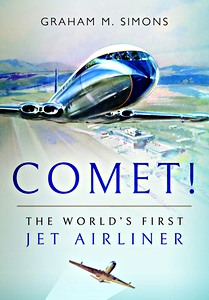
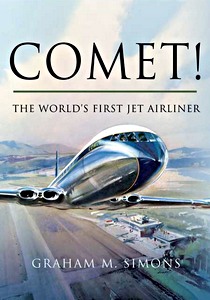
Comet! The World's First Jet Airliner (hard cover)
A comprehensive, picture rich history of the iconic craft. Includes myriad first hand accounts and photographic illustrations. Features many previously unpublished materials, acquired as a result of the authors complete access to the sprawling De Havilland archive.
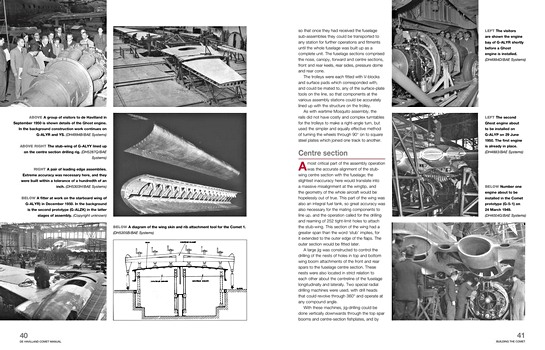
Extensively illustrated throughout, the book features details lifted directly from enquiry and salvage reports, much of which has never been published before and offers a unique insight into the failures and tragedies that blighted the early days of development, laying down lessons that were ultimately to benefit later designs.
As part of his research into the book, the author met and interviewed Harry Povey, the De Havilland Production Manager and John Cunningham, the Comet test pilot who would be the first to experience flight at the helms of the iconic craft.
Both of these first hand accounts are relayed in the book, adding a deeper sense of authenticity and a more personalised account of proceedings than facts and reports alone are able to achieve.
Attention is also paid to the derivative Nimrod design, and the book features an interview that the author conducted with the aircraft commander of the last ever Nimrod operational flight. Interviews of this kind are supplemented by the author's own narrative of proceedings, setting personal experience within historical context and exploring the themes and historical topics that the interviews evoke.
Product details
| Author: | Graham M. Simons |
|---|---|
| Details: | 288 pages, 10 x 7.1 x 0.91 in (25.5 x 18 x 2.3 cm), hardback |
| Illustrations: | 150 b&w and color photos |
| Language: | English |
| Publisher: | Pen & Sword Books Ltd (GB, 2013) |
| ISBN: | 9781781592793 |
Comet! The World's First Jet Airliner (hard cover)
Language: English