En achetant via ces liens, vous soutenez notre site sans frais supplémentaires pour vous. En savoir plus >

Navires de guerre - France : livres - histoire

Un livre sur les navires de guerre de la Marine nationale ? Découvrez ici des beaux livres sur l'histoire et types des navires de guerre de France.

Esprit de marine, forces de mer

Durant 20 ans, la Marine nationale a plus évolué que depuis la fin de la Seconde Guerre mondiale. Elle est, en effet, passée de l'ère des sous-marins à moteurs Diesel, contre-torpilleurs, croiseurs, cuirassés et porte-avions à la puissance de feu d'une portée de 20 à 40 km, à celle des bateaux ultra-légers, furtifs, armés de missiles pouvant atteindre une cible à plusieurs centaines de kilomètres et à propulsion par turbo-propulseurs ou moteurs atomiques.

Jean-Marie Chourgnoz est LE photographe-reporter qui fait éclater la Marine aux yeux du grand public, depuis plus de 20 ans, sous tous les cieux du monde.
Etre reporter-photographe, c'est avant tou croquer les équipages, les machines, les armements, mais aussi être la mémoire vivante de la Marine nationale, toujours à la pointe des techniques nouvelles.

Caractéristiques

Auteur :J.-M. Chourgnoz, M. Heger
Présentation :144 pages, 24 x 27 cm, relié
Illustration :220 photos en couleurs
Langue :français
Editeur :ETAI (F, 2001)
ISBN :9782726885406
Couverture du livre : Esprit de marine, forces de mer | ETAI

Esprit de marine, forces de mer

Langue : français

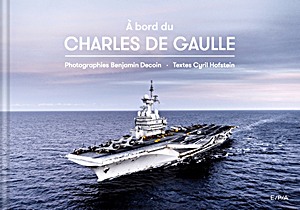
A bord du Charles de Gaulle

Navire amiral de la Marine nationale, le porte-avions nucléaire Charles de Gaulle est un bâtiment hors normes. Une ville flottante qui ne connaît jamais de répit. Engagé depuis 2001 dans de multiples missions de guerre et armé par un équipage exceptionnel de 2 000 hommes et femmes, le "Charles" et son groupe aéronaval ont su forger un outil opérationnel de premier plan. Fascinant, exigeant et essentiel pour la défense des intérêts de la France, le porte-avions fait partie de ces navires particuliers qui écrivent l'histoire.

Embarqués pendant la mission Arromanches III en Syrie et en Irak, le photographe Benjamin Decoin et le journaliste Cyril Hofstein sont allés à la rencontre de ces marins d'exception, ingénieurs, contrôleurs aériens, atomiciens, pilotes, manœuvriers, mécaniciens, pompiers, fusiliers marins, cuisiniers ou boulangers qui se relaient jour et nuit et par tous les temps pour assurer leur mission.
Ils ont réussi à transmettre magnifiquement, par leurs texte et images, l'esprit d'équipage qui anime ce géant d'acier de 42 500 tonnes, capable de parcourir 1 000 kilomètres par jour.

Prix Beau Livre "Marine Bravo Zulu" 2018 - Association des Officiers de Réserve de la Marine Nationale.

Caractéristiques

Auteur :Cyril Hofstein, Benjamin Decoin
Présentation :192 pages, 21 x 29.5 x 2.4 cm, relié
Illustration :abondamment illustré de photos en couleurs
Langue :français
Editeur :Editions E/P/A (F, 2017)
ISBN :9782851209313
Couverture du livre : A bord du Charles de Gaulle | E/P/A

A bord du Charles de Gaulle

Langue : français

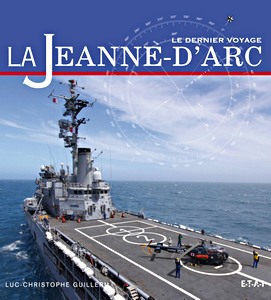
La Jeanne-d'Arc - Le dernier voyage

Elle aura écumé les mers pendant presque cinquante ans, de Brest son port d'attache jusqu'aux endroits les plus mythiques de la planète. Elle aura franchi tous les caps, accueilli à son bord des chefs d'état et des célébrités, secouru des populations sinistrées.
Jusqu'aux derniers instants de sa longue carrière, elle aura servi la France. Elle, c'est la Jeanne-d'Arc, le mythique porte-hélicoptères de la Marine française qui, de 1964 à 2010, a rempli sa mission de formation des officiers de Marine en menant ses équipages sur tous les océans.

Pour son dernier voyage, la Jeanne-d'Arc mit le cap vers les mers du sud, tutoyant une ultime fois le cap Horn avant de flirter avec la Patagonie, puis de remonter vers Panama, New York et enfin l'Europe. Le 27 mai 2010, elle revint pour la dernière fois à Brest et le 1er septembre elle perdait son nom pour devenir une simple coque grisâtre.

Ce livre vous invite à bord de la Jeanne-d'Arc pour son dernier voyage, à la découverte de la vie de ses marins, à travers les grandioses paysages des mers du sud et des chenaux de Patagonie. L'ouvrage est préfacé par le prince Albert II de Monaco.

Caractéristiques

Auteur :Luc-Christophe Guillerm
Présentation :176 pages, 30 x 27 cm, relié
Illustration :200 photos en N&B et en couleurs
Langue :français
Editeur :ETAI (F, 2011)
ISBN :9782726895641
Couverture du livre : La Jeanne-d'Arc - Le dernier voyage | ETAI

La Jeanne-d'Arc - Le dernier voyage

Langue : français

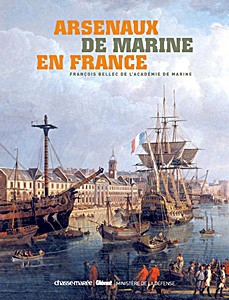
Les arsenaux de marine en France

Une puissance maritime se doit d'entretenir des arsenaux pour construire sa flotte et la maintenir en condition de navigation.
Complexes industriels sans équivalent au temps de la marine en bois, les grands arsenaux des XVIIe et XVIIIe siècles faisaient vivre des milliers de travailleurs : ingénieurs, charpentiers, gréeurs ou avitailleurs, etc.
Autant dire que Cherbourg, Brest, Lorient, Indret, Rochefort, Ruelle, Toulon ou encore Saint-Tropez s'identifiaient à leur arsenal !

François Bellec met en perspective l'histoire des arsenaux de marine français, en remontant aux origines antiques. Au fil du temps, les fluctuations politiques ont modulé les plans de charge, les effectifs ont varié, les hommes se sont adaptés à de nouveaux outils ?
Porté par une riche iconographie ancienne, des photographies récentes ainsi que des oeuvres des Peintres officiels de la Marine, Arsenaux de marine en France retrace l'évolution des bâtiments de la Royale puis de la Marine, des premiers vaisseaux amiraux aux sous-marins nucléaires.

Caractéristiques

Auteur :François Bellec
Présentation :224 pages, 30.5 x 24 x 2.1 cm, broché
Illustration :abondamment illustré de photos et de dessins
Langue :français
Editeur :Glénat (F, 2008)
ISBN :9782353570348
Couverture du livre : Les arsenaux de marine en France | Glénat

Les arsenaux de marine en France

Langue : français

Les sous-marins français, les bateaux noirs

Un ouvrage qui recense l'histoire des sous-marins français de la Marine nationale, via une magnifique iconographie incitant les lecteurs à la découverte et l'exploration de ce pouvoir stratégique marin.
On y découvre les navires les plus célèbres et moins connus dont le Redoutable, le Rubis, l'inflexible, le Tonnerre, le Dauphin ou encore Triomphant.
L'amiral Bernard Louzeau et le "peintre de la marine" Jean-Marie Chourgnoz nous font revivre l'univers exceptionnel et le quotidien de la Marine Française à bord des sous-marins.

Caractéristiques

Auteur :Bernard Louzeau, Jean-Marie Chourgnoz
Présentation :168 pages, 33 x 27 cm, relié
Illustration :200 photos en couleurs
Langue :français
Editeur :ETAI (F, 1998)
ISBN :9782726884126
Couverture du livre : Les sous-marins français, les bateaux noirs | ETAI

Les sous-marins français, les bateaux noirs

Langue : français

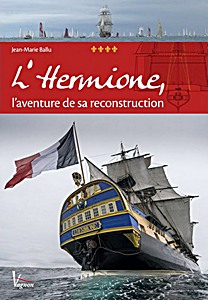
L'Hermione - l'aventure de sa reconstruction

Le frégate français l'Hermione de 1779 devint célèbre en transportant le général La Fayette aux États-Unis en 1780 pour lui permettre de rejoindre le camp américain dans la guerre d'Indépendance américaine.
En 2014 une réplique de l'Hermione, reconstruite par l'association Hermione-La Fayette dans l'ancien Arsenal de Rochefort à partir de 1997, est lancée en eaux salées.

Ce livre très documenté, avec des images d'archives inédites, retrace l'aventure de la reconstruction de l'Hermione, de l'ouverture du chantier aux premières mises à l'eau. C'est une vraie mine d'information sur les bois, l'architecture, la conception et la reconstruction de la frégate. On y raconte aussi les sorties en mer de l'Hermione, la vie à bord, et les anecdotes de voyage !

Caractéristiques

Auteur :Jean-Marie Ballu
Présentation :192 pages, 24.5 x 17 x 1.4 cm, broché
Illustration :abondamment illustré
Langue :français
Editeur :Editions Vagnon (F, 2016)
ISBN :9791027100965
Couverture du livre : L'Hermione - l'aventure de sa reconstruction | Vagnon

L'Hermione - l'aventure de sa reconstruction

Langue : français

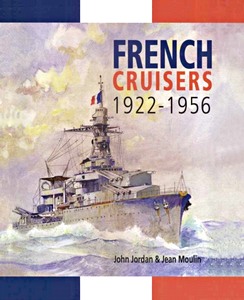
French Cruisers 1922-1956

The French produced some of the most striking and innovatory interwar cruiser designs. A large amount of new information about these ships has become available over the past twenty years in France, but this book is the first to make this accessible to an English-speaking readership.

Part I explains the design philosophy behind each of the classes built after 1922, and outlines the characteristics of each type, accompanied by detailed data tables and a comprehensive set of specially-drawn plans based on official documents, as well as carefully-selected photographs. Coverage includes the De Grasse, laid down in August 1939 and completed postwar as an AA cruiser, and also the heavy cruisers of the Saint Louis class intended to follow her, about which little has been published.

Part II deals with the historical side, covering not only the eventful careers of these ships, but also explaining the peacetime organisation of the Marine Nationale, the complex politics of this turbulent period and their impact on the navy.

Like its highly successful predecessor, "French Battleships", this beautifully presented book subtly blends technical and historical analysis to produce what must become the standard reference work.

Caractéristiques

Auteur :John Jordan, Jean Moulin
Présentation :232 pages, 29.5 x 25 x 2 cm, relié
Illustration :180 photos et de dessins en N&B et en couleurs
Langue :anglais
Editeur :Seaforth Publishing (GB, 2013)
ISBN :9781848321335
Couverture du livre : French Cruisers 1922-1956 | Seaforth

French Cruisers 1922-1956

Langue : anglais

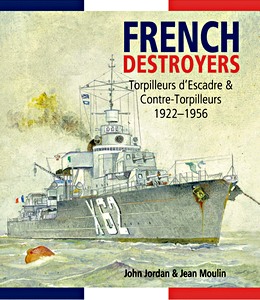
French Destroyers : Torpilleurs d'Escadre and Contre-Torpilleurs, 1922-1956

Between the wars the French produced some of the largest, and certainly the fastest, destroyers in the world. Known as Contre-Torpilleurs, these striking and innovatory super-destroyers form the core of this book, but the more conventional Torpilleurs d'Escadre are also covered.
This history combines the technical and service material published in French-language monographs over the past two decades with the authors' own research from primary sources.

The structure of the book follows that of the highly successful French Cruisers, with Part I devoted to the design of each of the classes built after 1922. The text is accompanied by detailed data tables and illustrated by a comprehensive set of specially-drawn plans and schemas based on official documents, as well as carefully-selected photographs from French naval sources and from private collections. Coverage runs down to the Le Hardi class, the last pre-war design.
Part II deals with the historical side, covering the eventful careers of these ships before, during and after the war. This section is illustrated by maps specially drawn for the book, and by contemporary photographs.

Like its highly successful predecessors, French Battleships and French Cruisers, this beautifully presented book blends technical and historical analysis to produce what must become the standard English-language reference work.

Caractéristiques

Auteur :John Jordan, Jean Moulin
Présentation :240 pages, 29 x 24.5 cm, relié
Illustration :abondamment illustré
Langue :anglais
Editeur :Seaforth Publishing (GB, 2015)
ISBN :9781848321984
Couverture du livre : French Destroyers : Torpilleurs d'Escadre and Contre-Torpilleurs, 1922-1956 | Seaforth

French Destroyers : Torpilleurs d'Escadre and Contre-Torpilleurs, 1922-1956

Langue : anglais

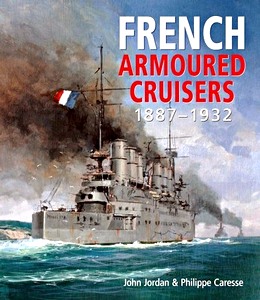
French Armoured Cruisers 1887 - 1932

Of all the threats faced by the Royal Navy during the first years of the twentieth century, the one which stood out was the risk to Britain's sea lines of communication posed by France's armoured cruisers. Fast, well-armed and well-protected, these ships could have evaded any attempted blockade of the French ports and, supported by a worldwide network of overseas bases, could potentially have caused havoc on the trade routes. Between 1898 and 1901 the French laid down thirteen ships, and completed nine in 1903-4 alone.

This book has as its subject the French armoured cruisers built from the late 1880s until shortly before the outbreak of the Great War, beginning with the revolutionary Dupuy-de-L me, the world's first modern armoured cruiser, and ending with the impressive six-funnelled Edgar Quinet and Waldeck-Rousseau.

The primary focus of the book is on the technical characteristics of the ships. Detailed and labelled drawings based on the official plans are provided by John Jordan, and each individual class of ship is illustrated by photographs from the extensive personal collection of Philippe Caresse.

The technical section is followed by a history in two parts, covering the Great War (1914-18) and the postwar years, during which the surviving ships saw extensive deployment as station' cruisers overseas and as training ships. This is the most comprehensive account published in English or in French, and is destined be the standard reference for many years to come.

Caractéristiques

Auteur :Jordan John , Caresse Philippe
Présentation :288 pages, 29.5 x 25.5 x 2.4 cm, relié
Illustration :240 photos et dessins en N&B
Langue :anglais
Editeur :Pen & Sword Books Ltd (GB, 2019)
ISBN :9781526741189
Couverture du livre : French Armoured Cruisers 1887 - 1932 | Pen & Sword

French Armoured Cruisers 1887 - 1932

Langue : anglais

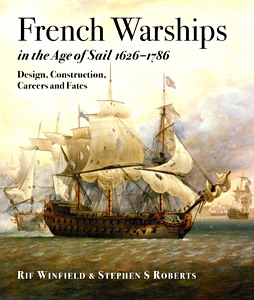
French Warships in the Age of Sail 1626-1786

The origins of a permanent French sailing navy can be traced to the work of Cardinal Richelieu in the 1620s, but this naval force declined rapidly in the 1650s and a virtually new "Marine Royale" had to be re-created by Colbert from 1661.
Thereafter, Louis XIV"s navy grew rapidly to become the largest and most powerful in the world, at the same time establishing a reputation for the quality of its ship design that lasted until the end of sail.

The eighteenth century was to see defeat and decline, revival and victory, but by 1786 the French Navy had emerged from its most successful naval war having frequently outfought or outmanoeuvred the British Navy in battle, and in the process making a major contribution to American independence.

This book is the first comprehensive listing of these ships in English, and follows the pattern set by its companion volume on the 1786-1861 period in providing an impressive depth of information.
It is organised by Rate, classification and class, with significant technical and building data, followed by highlights of the careers of each ship in every class. Thus for the first time it is possible to form a clear picture of the overall development of French warships throughout the whole of the sailing era.

Certain to become the standard English-language reference work, its publication is of the utmost importance to every naval historian and general reader interested in the navies of the sailing era.

Caractéristiques

Auteur :Rif Winfield, Stephen S. Roberts
Présentation :438 pages, 29.5 x 25.5 x 3.4 cm, relié
Illustration :230 photos et dessins
Langue :anglais
Editeur :Pen & Sword Books Ltd (GB, 2017)
ISBN :9781473893511
Couverture du livre : French Warships in the Age of Sail 1626-1786 | Pen & Sword

French Warships in the Age of Sail 1626-1786

Langue : anglais

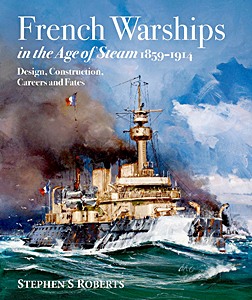
French Warships in the Age of Steam 1859-1914 - Design, Construction, Careers and Fates

In 1859 the French navy was at a high point, having fought alongside the British in the Crimean War and developed a formidable fleet of fast wooden-hulled steam ships of the line. But in that very year the world's navies had to start over again when French naval architect Dupuy de Lôme introduced the ironclad battleship.
The French navy then went through three tumultuous phases. In the 1860s and 1870s it focused on building a new traditionally-structured fleet in which wooden-hulled battleships gave way to iron and steel ships with massive guns and armour.
In the 1880s and 1890s this effort was disrupted by a vigorous contest between battleship sailors and advocates of fast steel cruisers and small torpedo craft, leaving France by the end of the 1890s with few new battleships (none as large as the best foreign ships) but some two hundred torpedo boats.
The Fashoda dispute with Britain in 1898 revealed the weakness of the French navy and between 1900 and 1914 the French focused on rebuilding a strong battle fleet. In 1914 this fleet remained well behind those of Britain and Germany in numbers, but taken individually French warships remained among the best in the world.

This book is the first comprehensive listing in English of more than 1400 warships that were added to the official French navy fleet list between 1 January 1859 and World War I. It includes everything from the largest battleships to a small armoured gunboat that looked like a floating egg.
Reflecting the main phases of naval policy, the ships are listed in three separate parts to keep contemporary designs together and then by ship type and class. For each class the book provides a design history explaining why the ships were built, substantial technical characteristics for the ships as completed and after major reconstructions, and selected career milestones including the ultimate fate of each ship.

Caractéristiques

Auteur :Stephen S. Roberts
Présentation :432 pages, 29.5 x 24.5 x 3.8 cm, relié
Illustration :250 photos et dessins
Langue :anglais
Editeur :Seaforth Publishing (GB, 2022)
ISBN :9781526745330
Couverture du livre : French Warships in the Age of Steam 1859-1914 - Design, Construction, Careers and Fates | Seaforth

French Warships in the Age of Steam 1859-1914 - Design, Construction, Careers and Fates

Langue : anglais

Napoleonic Naval Armaments 1792–1815 (Osprey)

There were many elements to British Napoleonic naval success but one of the key factors was gunnery. Other countries developed different naval weapons to fit their maritime strategies. The French and Spanish systems developed on similar lines, while those of the Baltic navies tended to rely on smaller craft and weapons. Holland, during this period, was part of the French sphere of influence and this had an effect on the development of its naval weapons.

This title describes the systems of all these countries as well as the fledgling navy of America, whose gunnery skills embarrassed the Royal Navy at the height of their dominance.

Caractéristiques

Auteur :Chris Henry
Présentation :48 pages, 24.5 x 18.5 x 0.5 cm, broché
Illustration :abondamment illustré de photos et dessins (en N&B et en couleurs)
Langue :anglais
Editeur :Osprey Publishing (GB, 2004)
Série :New Vanguard (90)
ISBN :9781841766355
Couverture du livre : Napoleonic Naval Armaments 1792–1815 | New Vanguard (90) | Osprey

Napoleonic Naval Armaments 1792–1815

Langue : anglais

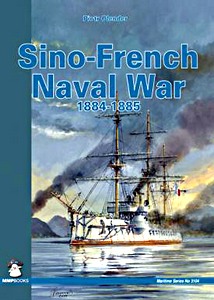
Sino-French Naval War 1884-1885

This book covers the naval engagements of the Sino-French War 1884-1885, a little-documented part of late 19th century naval history. The war was a colonial conflict in which France seized control of northern Vietnam from China.
The background, operations, battles (Fuzhou, Shipu, Zhenhai), blockades (Formosa) and outcomes are all described in detail in this book.

All the ships involved, both French and Chinese, are described and illustrated in scale plans with full technical specifications. The book is profusely illustrated with scale drawings and photographs.

Caractéristiques

Auteur :Piotr Olender
Présentation :128 pages, 29.5 x 21 x 0.8 cm, broché
Illustration :abondamment illustré de photos en N&B, dessins en couleurs
Langue :anglais
Editeur :MMP Books (PL, 2012)
ISBN :9788361421535
Couverture du livre : Sino-French Naval War 1884-1885 | MMP

Sino-French Naval War 1884-1885

Langue : anglais

Victory vs Redoutable - Ships of the line at Trafalgar 1805 (Osprey)

Late in the morning on 21 October 1805, warships from the British and combined French and Spanish fleets clashed off Cape Trafalgar on the Spanish coast. After a six month game of cat and mouse across the Atlantic, 27 British ships of the line engaged the Allied force of 33 ships of the line. This was a duel of skill, tenacity and bravery as captains and crews battled for mastery of the seas.

This book is an opportunity to relive the action at Trafalgar - read the accounts of sailors who were there, and who experienced the sound of scraping cutlasses and bombarding cannons at one of the most important naval engagements of history.
Understand how the guns were operated, learn about the training of crews and study the design and development of the incredible ships which dominated naval warfare of the period, as Gregory Fremont-Barnes reveals the revolutionary tactics used by Nelson to secure a victory that saved Britain from the threat of invasion and ensured British naval dominance for over a century.

Contents: Introduction - Chronology - Design and Development - Technical Specifications - Strategic Situation - The Combatants - Combat - Statistical Analysis - Aftermath - Bibliography - Index.

Caractéristiques

Auteur :Gregory Fremont-Barnes
Présentation :80 pages, 25.5 x 18 x 0.6 cm, broché
Illustration :abondamment illustré de photos et dessins (en N&B et en couleurs)
Langue :anglais
Editeur :Osprey Publishing (GB, 2008)
Série :Duel (9)
ISBN :9781846031342
Couverture du livre : Victory vs Redoutable - Ships of the line at Trafalgar 1805 | Duel (9) | Osprey

Victory vs Redoutable - Ships of the line at Trafalgar 1805

Langue : anglais

Atom-Uboote - USA, Frankreich und England (Typenkompass)

In the Second World War, submarines proved to be a serious and dangerous weapon. However, the conventional diesel engine limited their range and the length of possible dives. They were also extremely vulnerable during the necessary supply of fresh air for the engines via snorkels.

When the USA ushered in the nuclear submarine era with the nuclear-powered "Nautilus" in 1955, all of these disadvantages were over in one fell swoop and the large submarine fleets around the world had to follow suit.

Pages du livre [TK] Atom-Uboote - USA, Frankreich und England (1)

Pages du livre "Atom-Uboote - USA, Frankreich und England"

Ingo Bauernfeind describes the development of the nuclear submarines of the NATO states in this Typenkompass. Each type is presented with a photo, a historical description and a technical data sheet.

Caractéristiques

Auteur :Ingo Bauernfeind
Présentation :112 pages, 20.5 x 14 cm, broché
Illustration :44 photos en N&B et 95 en couleurs
Langue :allemand
Editeur :Motorbuch Verlag (D, 2015)
Série :Typenkompass
ISBN :9783613037724
Couverture du livre : Atom-Uboote - USA, Frankreich und England | Typenkompass | Motorbuch

Atom-Uboote - USA, Frankreich und England

Langue : allemand

Autres livres dans cette catégorie :

Couverture du livre : European Ironclads 1860-75 : La Gloire sparks the great ironclad arms race | New Vanguard (269)

European Ironclads 1860-75 : La Gloire sparks the great ironclad arms race

Angus Konstam | anglais | broché | 48 p. | 2019

Couverture du livre : French Battleships 1914-1945 | New Vanguard (266)

French Battleships 1914-1945

Ryan K. Noppen, Paul Wright | anglais | broché | 48 p. | 2019

Couverture du livre : French Battleships 1922-1956

French Battleships 1922-1956

John Jordan, Robert Dumas | anglais | broché | 232 p. | 2021

Couverture du livre : French Battleships of World War One

French Battleships of World War One

John Jordan, Philippe Caresse | anglais | relié | 328 p. | 2017

Couverture du livre : Alliierte Schlachtschiffe - England, Frankreich und UdSSR 1939-1945 | Typenkompass

Alliierte Schlachtschiffe - England, Frankreich und UdSSR 1939-1945

Ingo Bauernfeind | allemand | broché | 128 p. | 2012