By purchasing through the links, you support this site at no extra cost to you. Learn more >

 
Overview >

Warships: Illustrated History Books & Guides

Explore the best illustrated books on warships. Discover the history, models and evolution of warships.

Ancient Greek Warship 500-322 B.C. (Osprey)

Formidable and sophisticated, triremes were the deadliest battleships of the ancient world and at the height of their success the Athenians were the dominant exponents of their devastating power. Primarily galleys designed to fight under oar power, their main weapon was a bronze-plated ram situated at the prow.

This book offers a complete analysis of the most potent battleship of its time; the weapon by which Athens achieved, maintained and ultimately lost its power and prosperity.

Contents: Introduction - Origins - Design - Construction - Crew - In Action - Ruling the Waves - The Athenian Navy - Olympias - Bibliography - Colour Plate Commentary - Index.

Product details

Author:Nic Fields
Details:48 pages, 9.8 x 7.3 x 0.2 in (25 x 18.5 x 0.5 cm), paperback
Illustrations:photos and drawings (in b&w and color)
Language:English
Publisher:Osprey Publishing (GB, 2007)
Series:New Vanguard (132)
ISBN:9781846030741
Book cover: Ancient Greek Warship 500-322 B.C. | New Vanguard (132) | Osprey

Ancient Greek Warship 500-322 B.C.

Language: English

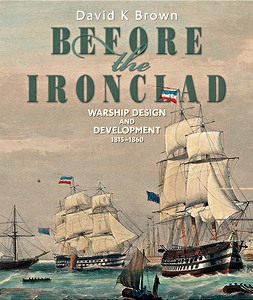
Before the Ironclad : Warship Design and Development 1815 - 1860

In the massive revolution that affected warship design between Waterloo and the Warrior, the Royal Navy was traditionally depicted as fiercely resisting every change until it was almost too late, but these old assumptions were first challenged in this authoritative history of the transition from sail to steam. Originally published in 1990, it began a process of revaluation which has produced a more positive assessment of the British contribution to the naval developments of the period.
This classic work is here reprinted in an entirely new edition, with more extensive illustration.

Beginning with the structural innovations of Robert Seppings, the book traces the gradual introduction of more scientific methods and the advent of steam and the paddle fighting ship, iron hulls and screw propulsion. It analyses the performance of the fleet in the war with Russia (1853-1856), and concludes with the design of the Warrior, the first iron-hulled, seagoing capital ship in the world.

The author presents a picture of an organisation that was well aware of new technology, carefully evaluating its practical advantage, and occasionally (as with its enthusiastic espousal of iron hulls) moving too quickly for the good of the service. Written by an eminent naval architect, "Before the Ironclad" is both a balanced account of general developments, and an in-depth study of the ships themselves.

Product details

Author:D. K. Brown
Details:224 pages, 11.4 x 9.7 in (29 x 24.5 cm), hardback
Illustrations:250 illustrations
Language:English
Publisher:Seaforth Publishing (GB, 2015)
ISBN:9781848322585
Book cover: Before the Ironclad : Warship Design and Development 1815 - 1860 | Seaforth

Before the Ironclad : Warship Design and Development 1815 - 1860

Language: English

Byzantine Warship vs Arab Warship : 7th - 11th Centuries (Osprey)

For 400 years the Byzantine Empire's naval forces vied with the warships of the Islamic world for mastery of the Mediterranean. At the heart of this confrontation were the fighting vessels of the two powers, the Byzantine dromon and the Arabic shalandi, both oared warships.
In those four centuries of warfare between two major maritime powers, both the Byzantines and the Arabs left us records of their doctrine and tactics, as well as of how their ships were built.

Featuring full-colour artwork and rigorous analysis from an authority on naval warfare, this enthralling book offers a glimpse of the long-lost world of war at sea in the age of Byzantium.

Contents: Introduction - Chronology - The Strategic Situation - Design and Development - Technical Specifications - The Combatants - Combat - Analysis - Aftermath - Further Reading - Index.

Product details

Author:Angus Konstam
Details:80 pages, 9.8 x 7.3 x 0.16 in (25 x 18.5 x 0.4 cm), paperback
Illustrations:photos and drawings (in b&w and color)
Language:English
Publisher:Osprey Publishing (GB, 2015)
Series:Duel (64)
ISBN:9781472807571
Book cover: Byzantine Warship vs Arab Warship : 7th - 11th Centuries | Duel (64) | Osprey

Byzantine Warship vs Arab Warship : 7th - 11th Centuries

Language: English

Fighting Ships of the Far East (1) - China and Southeast Asia 202 BC-AD 1419 (Osprey)

Using detailed descriptions, accurate cutaway plates and reliable historical examples, this book covers the history of Chinese ship design and naval warfare from the beginning of the Han dynasty to the first few years of the Ming dynasty. The epic battle of Lake Poyang in in 1363, won by the man who was to become the first Ming Emperor, is also detailed.

Contents: Introduction - Fighting Ships and Naval Warfare in the Ancient and Medieval Far East- Techniques and Types of Chinese Ships and Shipbuilding - The Chinese Fighting Ship - The Chinese Fighting Ship in Action - A case study of Chinese Fighting Ships - Southeast Asian Warships - Suggestions for Further Reading- Colour plate commentary - Index.

Product details

Author:Stephen Turnbull
Details:48 pages, 9.7 x 7.3 x 0.16 in (24.5 x 18.5 x 0.4 cm), paperback
Illustrations:photos and drawings (in b&w and color)
Language:English
Publisher:Osprey Publishing (GB, 2002)
Series:New Vanguard (61)
ISBN:9781841763866
Book cover: Fighting Ships of the Far East (1) - China and Southeast Asia 202 BC-AD 1419 | New Vanguard (61) | Osprey

Fighting Ships of the Far East (1) - China and Southeast Asia 202 BC-AD 1419

Language: English

Fighting Ships of the Far East (2) - Japan and Korea AD 612-1639 (Osprey)

Over the centuries, naval relations between Japan and Korea appear to have alternated between peaceful trade and outright hostility. However, this impression can be misleading, as much of what passed for mercantile activity was in fact conducted by Japanese pirate fleets, who pillaged the coasts of Korea and China in a long-lasting tradition that culminated in the greatest pirate raid of all: Hideyoshi's invasion of Korea in 1592.
This was the conflict that involved Ming China and almost dragged in Siam. It also led to Korea developing East Asia's most famous warship: the legendary turtle ship, which is described for the first time in full technical detail in this book.

Contents: Introduction - Fighting Ships and Naval Warfare in Japan and Korea - Techniques and Types of Korean Ships and Shipbuilding - Korean Shipboard Armaments - Korean Fighting Ships in Action - Techniques and Types of Japanese Ships and Shipbuilding - Japanese Shipboard Armaments - Japanese Fighting Ships in Action - Suggestions for Further Reading - Colour plate Commentary - Index.

Product details

Author:Stephen Turnbull
Details:48 pages, 9.7 x 7.3 x 0.2 in (24.5 x 18.5 x 0.5 cm), paperback
Illustrations:photos and drawings (in b&w and color)
Language:English
Publisher:Osprey Publishing (GB, 2003)
Series:New Vanguard (63)
ISBN:9781841764788
Book cover: Fighting Ships of the Far East (2) - Japan and Korea AD 612-1639 | New Vanguard (63) | Osprey

Fighting Ships of the Far East (2) - Japan and Korea AD 612-1639

Language: English

Hospital Ships and Troop Transport of the First World War

The biggest shipping loss of both world wars was the hospital ship Britannic, at almost 50,000 tons. Supposedly safe to travel the seas, many hospital ships were lost in both wars.
From the smallest of motor launches through steam yachts and converted ocean liners, Campbell McCutcheon tells the story of the First World War hospital ships. Many succumbed to accidents, mines or German submarines but many also faithfully provided a vital service without loss of life or accident.

Troopships were also vital right from the very first days of the war, when ships carried the BEF across the English Channel in August 1914. Meanwhile, convoys that included many great pre-war ocean liners pressed into service were bringing Canadian and Australasian troops to the UK and France, and later American troops as well.
Many would continue in service until long after the war had ended, repatriating soldiers well into 1919, and their story is also told in this beautifully illustrated book.

Product details

Author:Campbell McCutcheon
Details:128 pages, 6.5 x 9.7 x 0.55 in (16.5 x 24.5 x 1.4 cm), paperback
Illustrations:200 b&w photos
Language:English
Publisher:Amberley Publishing (GB, 2015)
ISBN:9781445638676
Book cover: Hospital Ships and Troop Transport of the First World War | Amberley

Hospital Ships and Troop Transport of the First World War

Language: English

Imperial Roman Warships 193-565 AD (Osprey)

The period of relative peace enjoyed by the Roman Empire in its first two centuries ended with the Marcomannic Wars. The following centuries saw near-constant warfare, which brought new challenges for the Roman Navy.
It was now not just patrolling the Mediterranean but also fighting against invaders with real naval skill such as Genseric and his Vandals.

With research from newly discovered shipwrecks and archaeological finds as well as the rich contemporary source material, this study examines the equipment and tactics used by the navy and the battles they fought in this tumultuous period, which includes the fall of Rome and the resurgence of the Eastern Empire under Justinian the Great.
Using spectacular illustrations, carefully researched ship profiles, and maps, this third volume in Osprey's Roman Warships miniseries charts the ultimate evolution of the Roman fleet in one of the most fascinating periods of its history.

Product details

Author:Raffaele D'Amato
Details:48 pages, 9.8 x 7.3 x 0.31 in (25 x 18.5 x 0.8 cm), paperback
Illustrations:many color photos and drawings
Language:English
Publisher:Osprey Publishing (GB, 2017)
Series:New Vanguard (244)
ISBN:9781472818263
Book cover: Imperial Roman Warships 193-565 AD | New Vanguard (244) | Osprey

Imperial Roman Warships 193-565 AD

Language: English

Imperial Roman Warships 27 BC-193 AD (Osprey)

The Roman Empire was not only built by the strength of the legions but also by a navy that was the most powerful maritime force ever to have existed. It was the presence of this fleet that secured the trade routes and maintained the communications within the huge Empire.

The superior design of their warships, coupled with skilled naval commanders such as Agrippa, Sextus Pompeius and Pontus Euxinus, gave the Roman Empire a formidable navy that could defend the coasts of the three continents under the rule of the Caesars.

Featuring archaeological photography and lavish artistic reconstructions, this book reveals the design and development history of Rome's naval force at the height of its Imperial power. As well as examining its warships, it reveals the navy's structure and the tactics that were developed to make the most of Rome's naval design superiority.

Contents: Introduction - Chronology - Historical background - The organization of the Roman Imperial navy - The ships: Biremes, Triremes, Quadriremes, Liburna, Esareme, Deceris, Actuaria, and Oneraria - Fighting on the sea: Roman naval tactics during the Early Empire - Employment in conquest wars - Campaigns - Glossary - Bibliography - Index.

Product details

Author:Dr Raffaele D'Amato
Details:48 pages, 9.8 x 7.3 x 0.2 in (25 x 18.5 x 0.5 cm), paperback
Illustrations:photos and drawings (in b&w and color)
Language:English
Publisher:Osprey Publishing (GB, 2016)
Series:New Vanguard (230)
ISBN:9781472810892
Book cover: Imperial Roman Warships 27 BC-193 AD | New Vanguard (230) | Osprey

Imperial Roman Warships 27 BC-193 AD

Language: English

Naval Anti-Aircraft Guns and Gunnery

This book does for naval anti-aircraft defence what the author's Naval Firepower did for surface gunnery - it makes a highly complex but historically crucial subject accessible to the layman.
It chronicles the growing aerial threat from its inception in the First World War and the response of each of the major navies down to the end of the Second, highlighting in particular the widely underestimated danger from dive-bombing.

Central to this discussion is an analysis of what effective AA fire-control required, and how well each navy's systems actually worked. It also takes in the weapons themselves, how they were placed on ships, and how this reflected the tactical concepts of naval AA defence.
As would be expected from any Friedman book, it offers striking insights - he argues, for example, that the Royal Navy, so often criticised for lack of 'air-mindedness', was actually the most alert to the threat, but that its systems were inadequate not because they were too primitive but because they tried to achieve too much.

The book summarises the experience of WW2, particularly in theatres where the aerial danger was greatest, and a concluding chapter looks at post-1945 developments that drew on wartime lessons.
All important guns, directors and electronics are represented in close-up photos and drawings, and lengthy appendices detail their technical data. It is, simply, another superb contribution to naval technical history by its leading exponent.

Product details

Author:Norman Friedman
Details:399 pages, 11.6 x 10 x 1.18 in (29.5 x 25.5 x 3 cm), hardback
Illustrations:350 photos and drawings
Language:English
Publisher:Seaforth Publishing (GB, 2014)
ISBN:9781848321779
Book cover: Naval Anti-Aircraft Guns and Gunnery | Seaforth

Naval Anti-Aircraft Guns and Gunnery

Language: English

Pirate Ship 1660-1730 (Osprey)

The deeds and personalities of famous pirates have received significant attention in recent years: however, no detailed depiction of their vessels has ever been produced.
This title redresses the imbalance, conducting a detailed exploration of the wide variety of pirate vessels that sailed the high seas during the 'golden age' of piracy (1690-1730), from gun-bristling warships to smaller craft such as sloops, brigantines and early schooners. It incorporates the latest archaeological evidence to produce a fascinating account of these vessels, detailing their origins, development and tactical engagement.

Packed with contemporary illustrations and superbly detailed colour artwork, the ships of the 'golden age' are brought vividly to life.

Contents: Introduction - The design of the ideal pirate ship - The origins of the pirate ships - The conversion of a prize - Small pirate vessels - Pirate flagships - The pirate ship in action - Glossary - Bibliography - Colour plate commentary - Index.

Product details

Author:Angus Konstam
Details:48 pages, 9.8 x 7.5 x 0.2 in (25 x 19 x 0.5 cm), paperback
Illustrations:photos and drawings (in b&w and color)
Language:English
Publisher:Osprey Publishing (GB, 2003)
Series:New Vanguard (70)
ISBN:9781841764979
Book cover: Pirate Ship 1660-1730 | New Vanguard (70) | Osprey

Pirate Ship 1660-1730

Language: English

Renaissance War Galley 1470–1590 (Osprey)

For most of the Renaissance period, naval warfare in the Mediterranean was dominated by the war galley, a unique naval vessel for a momentous age. During the struggle for supremacy between Christian and Muslim powers, war galleys formed the backbone of the rival battlefleets. Different regions of the Mediterranean produced their own versions of the war galley, thereby producing a number of variants on the basic design tailored to the needs and resources of particular nations.

This book examines the development of the war galley from its classically inspired resurrection in the 15th century until its demise in the early 17th century, providing the first ever in-depth study of this remarkable war machine.

Contents: Introduction - The Development of the Mediterreanean War Galley - Ordnance - Galley Types - Galley Construction- Logistics and Organisation - Tactics - Bibliography - Colour Plate Commentary - Index.

Product details

Author:Angus Konstam
Details:48 pages, 9.7 x 7.3 x 0.2 in (24.5 x 18.5 x 0.5 cm), paperback
Illustrations:photos and drawings (in b&w and color)
Language:English
Publisher:Osprey Publishing (GB, 2002)
Series:New Vanguard (62)
ISBN:9781841764436
Book cover: Renaissance War Galley 1470–1590 | New Vanguard (62) | Osprey

Renaissance War Galley 1470–1590

Language: English

Republican Roman Warships 509-27 BC (Osprey)

The birth of the mighty Roman Navy was anchored in the Romans' extraordinary ability to absorb and perfect the technology of other states and empires.
This is the story of the design, development and operation of the Republican Roman warship in the age of the conquest of the Mediterranean, from the first Roman naval adventure of 394 BC and the Punic Wars, to Pompey's operations against the Cilician Pirates and Caesar's victorious naval campaigns in Armorica, concluding with the consolidation of the Mediterranean Sea as Mare Nostrum with the battle of Actium in 31 BC.

Archaeological photography, including those of exciting new finds, such as the Roman warship rosta (rams) found in the Aegates Islands, accompany lavish artistic reconstructions in illustrating the ships of the first Roman navy.

Contents: Introduction - Chronology - Historical background - The origin of the Roman navy - The evolution of the Roman fleet - The ships (The Aphraktai; The Biremes; The Triremes; The Quadriremes; The Quinquiremes; The Sambuca; The Hemiola; The Liburna; The Oneraria; Structure and construction; Armament and decoration) - Fighting on the sea (Roman naval tactics; Employment in siege war) - Campaigns (The first Punic wars; Pompey and the Cilician Pirates; Caesar in Gaul; The naval wars of Octavianus and Agrippa) - Bibliography - Index.

Product details

Author:Raffaele D'Amato
Details:48 pages, 9.8 x 7.3 x 0.2 in (25 x 18.5 x 0.5 cm), paperback
Illustrations:photos and drawings (in b&w and color)
Language:English
Publisher:Osprey Publishing (GB, 2015)
Series:New Vanguard (225)
ISBN:9781472808271
Book cover: Republican Roman Warships 509-27 BC | New Vanguard (225) | Osprey

Republican Roman Warships 509-27 BC

Language: English

Torpedo - The Complete History of the World's Most Revolutionary Naval Weapon

The torpedo was the greatest single game-changer in the history of naval warfare. For the first time it allowed any small, cheap torpedo-firing vessel - and by extension a small, minor navy - to threaten the largest and most powerful warships afloat. The traditional concept of seapower, based on huge fleets of expensive capital ships, required radical rethinking.
It had long been understood that the most effective way of sinking a ship is to make a hole below the waterline, but centuries of experiments had failed to produce an effective method of achieving this. After many false starts and developmental cul-de-sacs, the answer proved to be the 'locomotive' or self-propelled torpedo, which became a practical proposition in the late nineteenth century.

This book is a broad-ranging international history of the weapon, tracing not only its origins and technical progress down to the present day, but also its massive impact on all subsequent naval wars.
"Torpedo" is the first dedicated study of this highly significant subject for over thirty years, a period in which much new information has come to light and the capabilities of the weapon itself have improved beyond recognition. Because of the crucial importance of the torpedo in naval history, this is a book no enthusiast or historian can afford to miss.

Product details

Author:Roger Branfill-Cook
Details:256 pages, 11.2 x 8.7 x 0.83 in (28.5 x 22 x 2.1 cm), hardback
Illustrations:200 photos and drawings
Language:English
Publisher:Seaforth Publishing (GB, 2014)
ISBN:9781848322158
Book cover: Torpedo - The Complete History of the World's Most Revolutionary Naval Weapon | Seaforth

Torpedo - The Complete History of the World's Most Revolutionary Naval Weapon

Language: English

Viking Longship (Osprey)

Viking longships evolved from one-man canoes of the Scandinavian Stone Age, through wood-built-ships of c. 200 BC into the recognisable longboats of the 4th century AD. From this point, the Viking Longship developed into the pre-eminent raider and trader in the North Sea and Baltic, venturing as far afield as the Mediterranean, North Atlantic and modern-day Russia.
Keith Durham uses reconstructions, original sources, translations and archaeological evidence to render a vivid picture of the vessels that dominated the seaways of Scandinavia, founded colonies on Iceland, Greenland and the New World and terrorised the coastlines of northern Europe. Also covered are Norman vessels, including the invasion fleet of William the Conqueror.

Contents: Introduction - The evolution of the Viking ship - Early skin and log boats - The Viking Age - Shipwrights and shipbuilding - Karvi - Shipbuilding in the 11th century - Conclusion - Glossary - Colour plate commentary - Index.

Product details

Author:Keith Durham
Details:48 pages, 9.7 x 7.3 x 0.2 in (24.5 x 18.5 x 0.5 cm), paperback
Illustrations:photos and drawings (in b&w and color)
Language:English
Publisher:Osprey Publishing (GB, 2002)
Series:New Vanguard (47)
ISBN:9781841763491
Book cover: Viking Longship | New Vanguard (47) | Osprey

Viking Longship

Language: English

Warships of the Ancient World 3000-500 BC (Osprey)

The world's first war machines were ships built two millennia before the dawn of the Classical world. Their influence on the course of history cannot be overstated. A wide variety of galleys and other types of warships were built by successive civilisations, each with their own distinctive appearance, capability and utility.
The earliest of these were the Punt ships and the war galleys of Egypt which defeated the Sea People in the first known naval battle. Following the fall of these civilisations, the Phoenicians built biremes and other vessels, while in Greece the ships described in detail in the 'Trojan' epics established a tradition of warship building culminating in the pentekonters and triaconters.

The warships of the period are abundantly illustrated on pottery and carved seals, and depicted in inscriptions and on bas-reliefs. The subject has been intensively studied for two and a half millennia, culminating in the contemporary works of authoritative scholars such as Morrison, Wallinga, Rodgers and Casson.
This book covers the subject in an accessible way.

Contents: Introduction - Egypt - Minoan Crete - Bronze Age Syria - Phoenicia: The Legacy of Ugarit - Greece - Bibliography.

Product details

Author:Adrian K. Wood
Details:48 pages, 9.8 x 7.3 x 0.16 in (25 x 18.5 x 0.4 cm), paperback
Illustrations:photos and drawings (in b&w and color)
Language:English
Publisher:Osprey Publishing (GB, 2013)
Series:New Vanguard (196)
ISBN:9781849089784
Book cover: Warships of the Ancient World 3000-500 BC | New Vanguard (196) | Osprey

Warships of the Ancient World 3000-500 BC

Language: English

 
Overview >

Related Titles:

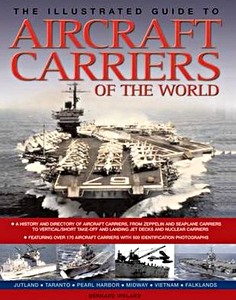
Book cover: The Illustrated Guide to Aircraft Carriers of the World

The Illustrated Guide to Aircraft Carriers of the World

Bernard Ireland | English | paperback | 256 p. | 2012

Book cover: Carriers at War 1939-1945

Carriers at War 1939-1945

Adrian Stewart | English | hardback | 228 p. | 2013

Book cover: World War I Seaplane and Aircraft Carriers | New Vanguard (238)

World War I Seaplane and Aircraft Carriers

Mark Lardas | English | paperback | 48 p. | 2016

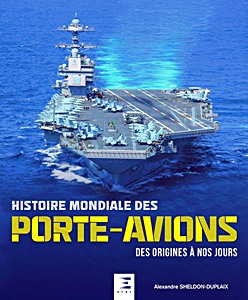
Book cover: Histoire mondiale des porte-avions, des origines à nos jours

Histoire mondiale des porte-avions, des origines à nos jours

Alexandre Sheldon-Duplaix | French | paperback | 240 p. | 2022