Wanneer u via onze links bestelt, ondersteunt u deze website zonder extra kosten. Meer informatie >

Elektrische locs - Groot-Brittannië: boeken - historie

Boeken over de historie, modellen en techniek van elektrische locomotieven van British Rail en andere spoorwegmaatschappijen in Groot-Brittannië.

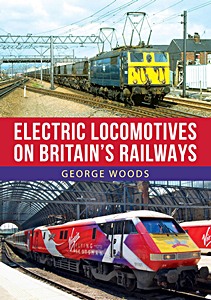
Electric Locomotives on British Railways

Voordat de elektrificatie van de West Coast Route in 1966 voltooid was, waren elektrische locomotieven ongebruikelijk op de Britse spoorwegen, met uitzondering van de lijn Manchester-Sheffield, die al sinds 1954 geëlektrificeerd was. Hoewel er in de voorstedelijke gebieden rondom grote steden en in Zuid-Engeland veel elektrische treinstellen reden, bleven stoomlocomotieven dominant.

De transformatie begon met het moderniseringsplan van British Rail uit 1955, dat gericht was op de vervanging van stoomlocomotieven door diesel- en elektrische tractie rond 1975. Het plan beoogde de hoofdlijnen en de drukste voorstedelijke trajecten te elektrificeren met een bovenleiding van 25.000 volt, een systeem dat verschilde van het derde railsysteem op de bestaande geëlektrificeerde trajecten.

In dit boek presenteert George Woods voornamelijk niet eerder gepubliceerde kleurenfoto's van verschillende typen elektrische locomotieven die sinds 1966 op het BR-netwerk zijn ingezet, en de uiteenlopende treinen die ze trokken.
De beelden tonen de evolutie na de elektrificatie-initiatieven en de overgang van stoomtractie naar elektrische en dieseltractie, in lijn met het moderniseringsplan van British Railways (BR).

Specificaties

Auteur:George Woods
Uitvoering:96 blz, 25.5 x 18 x 2.1 cm, paperback
Illustraties:180 kleurenfoto's
Taal:Engels
Uitgever:Amberley Publishing (GB, 2023)
ISBN:9781398102019
Omslag van het boek: Electric Locomotives on British Railways | Amberley

Electric Locomotives on British Railways

Taal: Engels

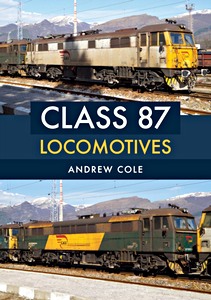
Class 87 Locomotives

When British Rail decided to electrify the West Coast Main Line north of Crewe towards Scotland, a new class of electric locomotive was needed to work these services. Thirty-six members of Class 87 were built at Crewe Works from 1973 onwards and were an instant success.
The first 35 members were standard locomotives; however, the final member was fitted with an experimental thyristor control system and was reclassified as Class 87/1.

All 36 members of the class received names and were a regular sight on the West Coast for decades. All were initially used on passenger work, but they could also be found on freight workings, being fitted with multiple working equipment from new.
The whole class stayed on West Coast workings throughout the BR era and into privatisation, with all members, except for No. 87101, passing to Virgin Trains.

The sole Class 87/1 passed to the Railfreight sector of BR and would eventually find its way into EWS ownership; it was scrapped in 2002. When their work on the West Coast was at an end, 21 members of the class found further use in Bulgaria and three would be preserved, with the remainder being scrapped.
In this book Andrew Cole documents the Class 87 locomotives.

Specificaties

Auteur:Andrew Cole
Uitvoering:96 blz, 23.5 x 16.5 x 1.4 cm, paperback
Illustraties:180 z/w- en kleurenfoto's
Taal:Engels
Uitgever:Amberley Publishing (GB, 2018)
ISBN:9781445666921
Omslag van het boek: Class 87 Locomotives | Amberley

Class 87 Locomotives

Taal: Engels

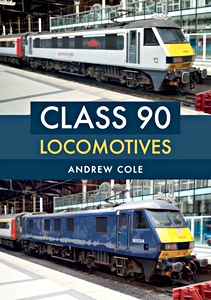
Class 90 Locomotives

In 1987 British Rail decided it needed a new class of AC electric locomotive for use on the West Coast Main Line. The idea was that this class would help eliminate the Class 85 locomotives and would be used on both freight and passenger workings.
Fifty members of the class were built at Crewe Works, alongside the Class 91 locomotives that were built for the East Coast Main Line.

The Class 90s were designed to be able to work with a Mk 3 DVT, which also eliminated the need to run round at terminal stations. The first twenty-five members were delivered in InterCity Swallow livery, the following eleven in InterCity Mainline livery, allowing them to be used on passenger and freight workings, with the final fourteen members delivered in Railfreight Speedlink livery being predominantly freight locomotives.

Most of the class are still in use today, with fifteen still used on passenger workings out of Norwich and the remainder in use with DB Cargo or Freightliner. This book tells the story of the Class 90s.

Specificaties

Auteur:Andrew Cole
Uitvoering:96 blz, 23.5 x 16.5 x 1.2 cm, paperback
Illustraties:180 z/w- en kleurenfoto's
Taal:Engels
Uitgever:Amberley Publishing (GB, 2018)
ISBN:9781445666969

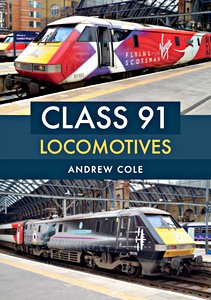
Class 91 Locomotives

British Rail introduced thirty-one Class 91 locomotives from 1989 onwards. They were built at Crewe Works for use on passenger services on the East Coast Main Line out of London King's Cross. They were designed with a sleek cab at one end, while the other was fitted with a blunt cab, as it was envisaged that they would work parcels and freight traffic overnight, thus not requiring the high-speed running.

With their maximum speed of 140 mph/225 km/h, they became known as the InterCity 225s and No. 91110 currently holds the speed record for a British locomotive. The end is now in sight for this class of locomotive on the East Coast, with the introduction of the Virgin Trains Class 800 Azuma units, but hopefully a use can be found for these distinctive looking and sounding electric locomotives.

The Class 91s have served the East Coast for nearly thirty years, and this book looks at their careers from the start. There have been a couple of high-profile accidents and incidents involving the class, but all are still in use today. They have had many different operators, and this book sets out to chart the different liveries, and also one-off special liveries carried by the class.

Specificaties

Auteur:Andrew Cole
Uitvoering:96 blz, 23.5 x 16.5 x 0.7 cm, paperback
Illustraties:180 z/w- en kleurenfoto's
Taal:Engels
Uitgever:Amberley Publishing (GB, 2018)
ISBN:9781445681375

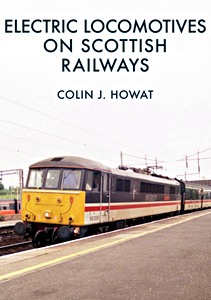
Electric Locomotives on Scottish Railways

Covers virtually the whole of the electrified network across Scotland. The first electrification took place on the north side of Glasgow from 1960 when the Airdrie to Helensburgh line and branches in between were done. This was followed closely by the south side of Glasgow when electrification spread to the Cathcart Circle, Neilston and Newton areas.
In 1967, the lines between Glasgow Central and Gourock along with the Wemyss Bay branch were added to the system. Progress throughout Central Scotland has been steady since, with approximately 40 per cent of the whole network now electrified.

One of the most popular electric locos on the network was the Class 86. These locos could be found working anything from small shunt moves in yards to express services until the mid-2000s when Virgin introduced Class 390 EMUs.
This book covers electric locos from humble Class 81s up to and including Class 92s, with images from 1974 until the present day.

Specificaties

Auteur:Colin J. Howat
Uitvoering:96 blz, 23.5 x 16.5 x 1.1 cm, paperback
Illustraties:180 z/w- en kleurenfoto's
Taal:Engels
Uitgever:Amberley Publishing (GB, 2018)
ISBN:9781445676340
Omslag van het boek: Electric Locomotives on Scottish Railways | Amberley

Electric Locomotives on Scottish Railways

Taal: Engels

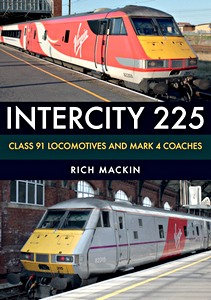
InterCity 225 - Class 91 Locomotives and Mark 4 Coaches

Ordered in 1985, the Class 91 was a joint venture between GEC, Brush and ASEA to deliver a fleet of 140 mph tilting electric locomotives for the East Coast Main Line.
Delivered between 1988 and 1991, the thirty-one locomotives ply their trade daily from London to the North East and Scotland. Accompanied by Metro-Cammell's Mark 4 coaches, they formed British Rail's flagship 'Intercity 225' programme.

While the 225s never tilted nor reached their full speed, for nearly thirty years they have conveyed thousands of passengers each day along the ECML. Today, the Class 91s and Mark 4s are approaching the end of their working lives.
Once Hitachi's Class 800 Intercity Express trains are delivered, a small handful of Class 91s will work with shortened Mark 4 sets on non-stop services.
The majority of the fleet faces an uncertain future, with no clear plans for redeployment elsewhere.

This book looks at these East Coast workhorses, which have followed in the footsteps of Gresley's famous Pacific locomotives, the Deltics and HSTs.

Specificaties

Auteur:Rich Mackin
Uitvoering:96 blz, 23.5 x 16.5 x 1.8 cm, paperback
Illustraties:180 z/w- en kleurenfoto's
Taal:Engels
Uitgever:Amberley Publishing (GB, 2018)
ISBN:9781445676388
Omslag van het boek: InterCity 225 - Class 91 Locomotives and Mark 4 Coaches | Amberley

InterCity 225 - Class 91 Locomotives and Mark 4 Coaches

Taal: Engels

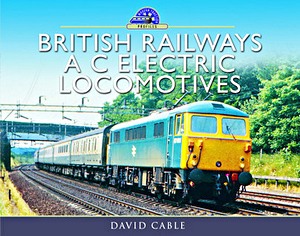
British Railways AC Electric Locomotives - A Pictorial Guide (Modern Traction Profiles )

The genesis of 25kv overhead electrification began in the late 1960s on the West Coast Main Line, the 1980s for the East Anglian Main Line, and the East Coast Main Line in the late 1980s.
Development took place in stages culminating in fully electrified lines from London to Scotland on both East and West Coast lines, and from London to Norwich. The introduction of these lines required the construction of new motive power.

Initially five types were produced for the WCML, from which the second phase of loco design was developed, giving a higher level of reliability, as well as power output.
These newer designs were applied to the Anglian services, but the ECML plans required an updated design, ostensibly for mixed traffic, but hardly ever used on anything other than express passenger services, for which their 140mph potential enabled a major recast of the timetable.
The opening of the Channel Tunnel required a mixed traffic dual voltage locomotive, running on both 25kv and the Southern Region 750v third rail DC.

The locomotives are classified between 81 and 92 inclusive, and this book of photographs by David Cable covers all the classes in a variety of locations and duties.

Specificaties

Auteur:David Cable
Uitvoering:160 blz, 24 x 25 cm, harde kaft
Illustraties:165 kleurenfoto's
Taal:Engels
Uitgever:Pen & Sword Books Ltd (GB, 2017)
ISBN:9781473896376
Omslag van het boek: British Railways AC Electric Locomotives - A Pictorial Guide | Pen & Sword

British Railways AC Electric Locomotives - A Pictorial Guide

Taal: Engels

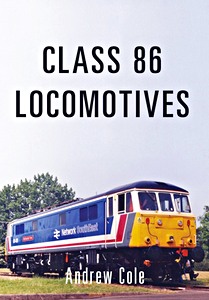
Class 86 Locomotives

De Class 86 van elektrische locomotieven bestond uit honderd exemplaren, gebouwd vanaf 1965. De eerste veertig locomotieven werden gebouwd door British Rail in de fabriek in Doncaster, en de andere zestig door English Electric in de fabriek in Vulcan.

Ze werden gebouwd voor de West Coast-diensten, die vanuit Londen geëlektrificeerd waren en uiteindelijk helemaal tot Glasgow zouden rijden. Ze werden geleverd in een elektrisch blauwe kleurstelling, compleet met gegoten leeuw en wiel.
Ze stonden oorspronkelijk bekend als de AL6-klasse, maar onder TOPS werden ze de Klasse 86. Aanvankelijk werden ze genummerd in de serie 86/0 en de serie 86/2, waarbij de 86/2's werden ingezet voor passagiersvervoer omdat ze waren uitgerust met een verbeterde ophanging, waardoor ze een snelheid van 160 km/U konden bereiken.

Drie exemplaren van de Class 86/2 werden gebruikt als testtreinen voor de ontwikkeling van de Class 87. Ze werden voorzien van andere draaistellen en zo ontstond de Class 86/1-serie. De locomotieven van deze klasse werden ook ingezet voor passagiersvervoer op de Great Eastern-route van Londen naar Norwich, waarna ze uiteindelijk werden vervangen door de Class 90.
Ze zijn ook zeer nuttige locomotieven gebleken voor goederenvervoer, en een flink aantal is nog steeds in gebruik bij Freightliner.

Specificaties

Auteur:Andrew Cole
Uitvoering:96 blz, 23.5 x 16.5 cm, paperback
Illustraties:180 z/w- en kleurenfoto's
Taal:Engels
Uitgever:Amberley Publishing (GB, 2016)
ISBN:9781445662084

BR AC Electric Locomotives in Colour

Promoted as part of the Modernisation Plan of 1955, the electrification at 25kV of the West Coast main line from London to Birmingham, Manchester, Liverpool and ultimately Glasgow was one of the most ambitious schemes to emerge from the Plan.
Although there had been electrification of main lines before, such as the short-lived line from Newport to Shildon and the LNER proposals for the Manchester-Sheffield line via Woodhead, these routes had been selected primarily for freight purposes; the WCML plan envisaged the conversion, to the most modern standards, of one of the core main lines in the country.
The conversion was to establish the standard for future work on the ECML and the GER route to Norwich. Work started in the late 1950s and, although the first stretch was energized in 1960s, it was not formally opened until June 1961.

Gavin Morrison provides a record of the various types of 25kV AC locomotive constructed over the past half century. Some of these classes are now as much a part of history as the steam locomotives that they were destined to replace, whilst others remain at the forefront of main-line service.
The book also includes a historical examination of the development of electric locomotives, allied to the colour illustrations with detailed captions.

Specificaties

Auteur:Gavin Morrison
Uitvoering:96 blz, 28.5 x 22 x 1.3 cm, harde kaft
Illustraties:rijk geïllustreerd met kleurenfoto's
Taal:Engels
Uitgever:Ian Allan Publishing (GB, 2013)
ISBN:9780711035058
Omslag van het boek: BR AC Electric Locomotives in Colour | Ian Allan

BR AC Electric Locomotives in Colour

Taal: Engels

Andere boeken in deze categorie:

Omslag van het boek: British Industrial Steam Locomotives - A Pictorial Survey

British Industrial Steam Locomotives - A Pictorial Survey

David Mather | Engels | harde kaft | 204 blz | 2021

Omslag van het boek: Industrial Locomotives & Railways of the North West of England

Industrial Locomotives & Railways of the North West of England

Gordon Edgar | Engels | paperback | 128 blz | 2018

Omslag van het boek: Working and Preserved Industrial Locomotives - From the Bill Reed Collection

Working and Preserved Industrial Locomotives - From the Bill Reed Collection

Peter Tuffrey | Engels | paperback | 128 blz | 2012