By purchasing through the links, you support this site at no extra cost to you. Learn more >

Trains - Netherlands (up to 1945): Illustrated History Books & Guides

Explore the best illustrated books on the history, locomotives and other rolling stock of the NS (Nederlandse Spoorwegen) and other railway companies in the Netherlands up to 1945.

175 jaar Utrecht Spoorstad - Wandelen en fietsen langs spoorwegerfgoed

On 6 December 1843 the Nederlandsche Rhijn Spoorwegmaatschappij festively opened the Amsterdam-Utrecht railway line. In the years that followed, Utrecht grew into the most important railway junction in the Netherlands.
Not only stations were built in the city, but also workshops, signal boxes, viaducts, bridges and staff housing. The largest railway companies built their head offices here.
Today, the recently renovated Utrecht Centraal is still the centre of our national railway system and the station has the most train passengers in our country.

From the modern heart, a walking and cycling route has been set out along the railway heritage in the city of Utrecht. Be surprised by the new Utrecht Central Station and follow the track along more than 80 large and small monuments that recall Utrecht's 175-year railway history.

This book was published on the occasion of the exhibition in Het Utrechts Archief "Utrecht spoorstad" 14/12/2018 - 6/07/2019.

Product details

Author:Kees Volkers
Details:80 pages, 8.5 x 6.1 x 0.51 in (21.5 x 15.5 x 1.3 cm), hardback
Illustrations:many color photos
Language:Dutch
Publisher:Stokerkade (NL, 2018)
ISBN:9789079156467
Book cover: 175 jaar Utrecht Spoorstad - Wandelen en fietsen langs spoorwegerfgoed | Stokerkade

175 jaar Utrecht Spoorstad - Wandelen en fietsen langs spoorwegerfgoed

Language: Dutch

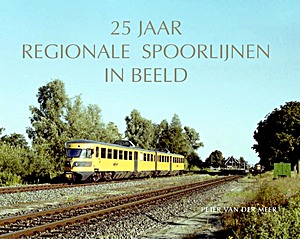
25 Jaar regionale spoorlijnen in beeld

In 1998, Oostnet took over the train service between Almelo and Mariënberg, marking the first time a regional line was operated by a company other than NS. Since then, several new operators have started services on many lines and have become essential in Dutch public transport.

This represents an important chapter in the history of rail transport. The book provides an overview of developments on regional lines in the Netherlands over the past 25 years. With numerous illustrations and photos, it offers both a visual and textual view of changes from 1998 to 2023.

Product details

Author:Peter van der Meer
Details:160 pages, 9 x 10.6 in (24 x 27 cm), hardback
Illustrations:extensively illustrated
Language:Dutch
Publisher:Uitgeverij de Alk B.V. (NL, 2023)
ISBN:9789059612723
Book cover: 25 Jaar regionale spoorlijnen in beeld | de Alk

25 Jaar regionale spoorlijnen in beeld

Language: Dutch

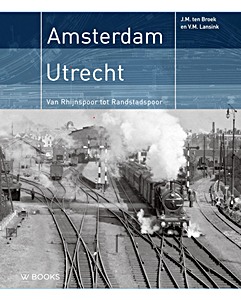
Amsterdam - Utrecht: Van Rhijnspoor tot Randstadspoor

Almost everyone knows that the first train in the Netherlands ran between Amsterdam and Haarlem (1839), but on paper the so-called Rhijnspoorweg between Amsterdam and Cologne was the first railway line in the Netherlands. Due to lack of finances, the first stage of the Rhijnspoorweg between Amsterdam and Utrecht was not opened until December 1843.
Over the years, the line has been rebuilt and relocated many times, with the major expansions being the major railway works in Amsterdam and Utrecht in the 1930s, the symbiosis with the Amsterdam metro and the four-track system around the year 2000.

Today, this railway line is one of the busiest routes in the Netherlands. Michiel ten Broek and Victor Lansink take you on a journey through time along this fascinating railway line due to the many changes, using many historical and atmospheric illustrations.

Also featured are high-profile stations such as Amsterdam Amstel, Duivendrecht, Amsterdam Bijlmer Arena and Utrecht Centraal, as well as vanished stations such as Amsterdam Weesperpoort and Nieuwersluis.

Product details

Author:Michiel ten Broek, Victor Lansink
Details:168 pages, 12 x 9.7 in (30.5 x 24.5 cm), hardback
Illustrations:200 b&w and color photos
Language:Dutch
Publisher:Uitgeverij Wbooks (NL, 2018)
ISBN:9789462582927
Book cover: Amsterdam - Utrecht: Van Rhijnspoor tot Randstadspoor | Wbooks

Amsterdam - Utrecht: Van Rhijnspoor tot Randstadspoor

Language: Dutch

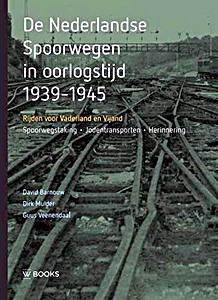
De Nederlandse Spoorwegen in oorlogstijd 1939-1945 - Rijden voor Vaderland en Vijand

On 17 September 1944, the Dutch Railway Strike began. On the orders of the government in exile, more than 30, 000 people on the Dutch Railways stopped working. In this way, they hoped to support the Allied offensive towards Arnhem, known as Operation Market Garden.

In the first week of the strike, the Germans were seriously hampered by the lack of rail transport, but later they managed to regain some control over the supply of equipment and personnel with their own people.
Market Garden largely failed, but the strike continued. Financing the strike, by continuing to pay the salaries of railway workers in hiding, was a huge operation that was successfully completed thanks to the largest bank robbery in Dutch history.

In this book, Guus Veenendaal (former company historian of the Dutch Railways) and David Barnouw (historian, previously affiliated with the NIOD as a researcher) describe the run-up to the strike, the strike itself, but also the image of the strike after the liberation.
Dirk Mulder (director of the Westerbork Camp Memorial Center) writes about the transport by rail of Jews, Roma, prisoners of war and other groups on behalf of the Germans.

Product details

Author:Guus Veenendaal, David Barnouw, Dirk Mulder
Details:160 pages, 9.1 x 6.7 x 0.87 in (23 x 17 x 2.2 cm), hardback
Illustrations:b&w and color photos
Language:Dutch
Publisher:Uitgeverij Wbooks (NL, 2019)
ISBN:9789462583337
Book cover: De Nederlandse Spoorwegen in oorlogstijd 1939-1945 - Rijden voor Vaderland en Vijand | Wbooks

De Nederlandse Spoorwegen in oorlogstijd 1939-1945 - Rijden voor Vaderland en Vijand

Language: Dutch

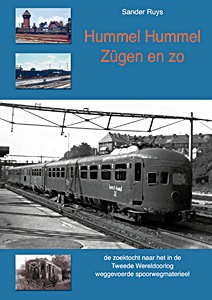
Hummel Hummel-Zügen en zo: de zoektocht naar het in de Tweede Wereldoorlog weggevoerde spoorwegmaterieel

Even before the liberation of the Netherlands North of the major rivers, it was clear that the occupying forces had systematically, structurally and on a large scale removed the most diverse goods from the Netherlands.
Approximately 90% of these were removed from the country after the start of Operation Market Garden and the railway strike on 17 September 1944. During that period, the Germans plundered many factories and the railways, but also evacuated cities and villages, such as Arnhem.
Against this background, the Dutch government established the Commissariat-General for Dutch Economic Interests in Germany in April 1945, which was tasked with tracing and returning removed goods and promoting the economic interests of the Netherlands in Germany.

This book tells the story of the search that took place in the period 1945 to 1951 for the deported property of the Dutch Railways and the associated exchange of (mainly) German railway equipment captured in the Netherlands or left behind.
The book also discusses the railway equipment that was not returned ("missing") and left behind in the GDR, Poland and other Eastern European countries, about which more and more has become known since the fall of the Berlin Wall. This is supported by many photos and overviews.

Product details

Author:Sander Ruys
Details:112 pages, 11.6 x 8.25 in (29.5 x 21 cm), hardback
Illustrations:b&w photos
Language:Dutch
Publisher:Uitgeverij de Alk B.V. (NL, 2020)
ISBN:9789059612303
Book cover: Hummel Hummel-Zügen en zo: de zoektocht naar het in de Tweede Wereldoorlog weggevoerde spoorwegmaterieel | de Alk

Hummel Hummel-Zügen en zo: de zoektocht naar het in de Tweede Wereldoorlog weggevoerde spoorwegmaterieel

Language: Dutch

Related Titles:

Book cover: Tot het rode licht gedoofd is - Overwegen in Nederland toen en nu

Tot het rode licht gedoofd is - Overwegen in Nederland toen en nu

Carel van Gestel | Dutch | hardback | 168 p. | 2018

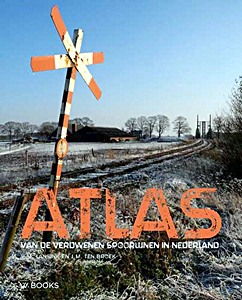
Book cover: Atlas van de verdwenen spoorlijnen in Nederland (5e geactualiseerde druk)

Atlas van de verdwenen spoorlijnen in Nederland (5e geactualiseerde druk)

J.M. ten Broek, V.M. Lansink | Dutch | hardback | 208 p. | 2020