Niszczyciele - Wielka Brytania: książki - historia i statki

Szukasz książki o niszczycielach Royal Navy? Znajdziesz tu książki o historii i typach niszczycieli z Wielkiej Brytanii.

Niezależne rekomendacje książek! Zakupy przez nasze linki wspierają nas bez dodatkowych kosztów dla Ciebie. Więcej informacji >

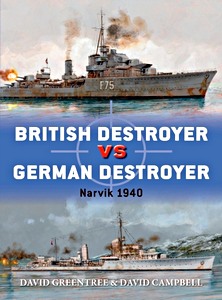
British Destroyer vs German Destroyer : Narvik 1940 (Osprey)

W pierwszych miesiącach II wojny światowej brytyjska Królewska Marynarka Wojenna (Royal Navy) stanęła w obliczu odradzającej się niemieckiej floty, Kriegsmarine. Po niemieckiej inwazji na Danię i Norwegię na początku kwietnia 1940 roku, brytyjskie i niemieckie niszczyciele starły się w serii bitew o kontrolę nad wybrzeżem Norwegii.
Środowisko operacyjne było szczególnie trudne, ponieważ załogi niszczycieli musiały zmagać się ze zmienną pogodą, wąskimi pasami przybrzeżnymi oraz możliwością mgły i awarii okrętu.

Podczas dwóch starć w Narwiku Królewska Marynarka Wojenna wpłynęła do portu i zaatakowała krążące niemieckie niszczyciele, które wysadziły oddziały górskie, aby wesprzeć niemiecką inwazję. Naloty okazały się druzgocące, zmniejszając o połowę liczbę jednostek pozostających w dyspozycji Hitlera.

Wykorzystując specjalnie zamówione dzieła sztuki i czerpiąc z różnych źródeł, to wciągające studium śledzi ewolucję technologii i taktyk stosowanych przez brytyjskie i niemieckie siły niszczycieli, a także ocenia wpływ starć pod Narwikiem na późniejszy rozwój i rozmieszczenie niszczycieli przez obie strony w różnych rolach na oceanach świata.

Szczegóły

Autor:David Greentree
Wydanie:80 stron, 25 x 18.5 cm, miękka oprawa
Ilustracje:bogato ilustrowane, zdjęcia czarno-białe i kolorowe
Język:angielski
Wydawca:Osprey Publishing (GB, 2018)
Seria:Duel (88)
ISBN:9781472828583
Okładka książki: British Destroyer vs German Destroyer : Narvik 1940 | Duel (88) | Osprey

British Destroyer vs German Destroyer : Narvik 1940

Język: angielski

Sprawdź cenę i dostępność:
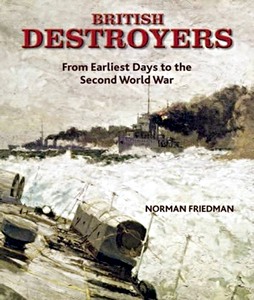
British Destroyers - From Earliest Days to the Second World War

In the late 19th century the advent of the modern torpedo woke the Royal Navy to a potent threat to its domination, not seriously challenged since Trafalgar. For the first time a relatively cheap weapon had the potential to sink the largest, and costliest exponents of sea power. Not surprisingly, Britain's traditional rivals invested heavily in the new technology that promised to overthrow the naval status quo.

The Royal Navy was also quick to adopt the new weapon, but the British concentrated on developing counters to the essentially offensive tactics associated with torpedo-carrying small craft. From these efforts came 'torpedo catchers', torpedo-gunboats and eventually the torpedo-boat destroyer, a type so successful that it eclipsed and the usurped the torpedo-boat itself. With its title shortened to 'destroyer', the type evolved rapidly and was soon in service in many navies, but in none was the evolution as rapid or as radical as in the Royal Navy

This book is the first detailed study of their early days, combining technical history with an appreciation of the changing role of destroyers and the tactics of their deployment. Like all of Friedman's books, it reveals the rationale and not just the process of important technological developments.

Szczegóły

Autor:Norman Friedman
Wydanie:320 stron, 29.5 x 25.5 x 2.6 cm, twarda oprawa
Ilustracje:ilustracji czarno-białych
Język:angielski
Wydawca:Seaforth Publishing (GB, 2009)
ISBN:9781848320499
Okładka książki: British Destroyers - From Earliest Days to the Second World War | Seaforth

British Destroyers - From Earliest Days to the Second World War

Język: angielski

Sprawdź cenę i dostępność:
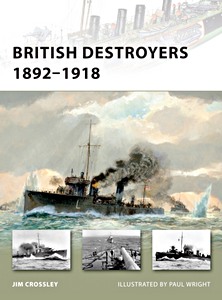
British Destroyers 1892-1918 (Osprey)

Presents the history of the first destroyers of the Royal Navy, which revolutionized the way war was fought at sea with new armaments and a great improvement on earlier designs. Moreover, between 1892, when the first destroyers were laid down, and 1918, destroyers evolved radically from 27-knot, 250-ton ships into 35-knot, 1,530-ton ships.

All these ships were involved in some form during World War I; the smaller, original destroyers in an auxiliary support role and the newer, larger destroyers at some of the greatest sea battles of the war.

This account highlights the role the destroyers played in the North Sea during the crucial battles to control the Heliogoland Bight, as well as the major fleet action at the battle of Jutland in 1916.
Complete with a detailed description of the technical evolution of each class of destroyer from the 27-knotters to the Tribal and Marksman classes, Jim Crossley offers a complete overview of the vessels that helped to maintain Britain's naval supremacy.

Szczegóły

Autor:Jim Crossley
Wydanie:48 stron, 25 x 18.5 x 0.5 cm, miękka oprawa
Ilustracje:ilustrowane zdjęciami i rysunkami (czarno-białe i kolorowe)
Język:angielski
Wydawca:Osprey Publishing (GB, 2009)
Seria:New Vanguard (163)
ISBN:9781846035142
Okładka książki: British Destroyers 1892-1918 | New Vanguard (163) | Osprey

British Destroyers 1892-1918

Język: angielski

Sprawdź cenę i dostępność:
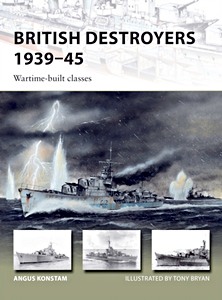
British Destroyers 1939-45 - Wartime-built classes (Osprey)

W latach 30. XX wieku, gdy pojawiła się groźba wojny, brytyjska Admiralicja postanowiła unowocześnić swoją flotę niszczycieli, aby móc konkurować z nowymi okrętami budowanymi przez Niemcy i Japonię. Efektem było wprowadzenie do służby potężnych okrętów klasy Tribal.
Następnie zaprojektowano pierwszy z kilku nieco mniejszych statków, które przenosiły mniej dział niż Tribale, lecz były uzbrojone w znacznie powiększony zestaw torped.

Pierwsza z nich, klasa J/K/M, doczekała się szeregu wariantów wojennych, z niewielkimi zmianami w uzbrojeniu, aby dostosować je do różnych ról odgrywanych w czasie wojny.

Niszczyciele te zaprojektowano do walki z wrogimi okrętami nawodnymi, samolotami i U-Bootami. Brytyjczycy budowali je tak, aby mogły stawić czoła wszystkiemu, co mógł im rzucić wrogi okręt.

W tej fascynującej, nowej publikacji, wykorzystującej kolekcję współczesnych fotografii i pięknych kolorowych dzieł sztuki, przedstawiono okręty, które stanowiły trzon Royal Navy podczas II wojny światowej.

Szczegóły

Autor:Angus Konstam
Wydanie:48 stron, 25 x 18.5 x 0.5 cm, miękka oprawa
Ilustracje:bogato ilustrowane, zdjęcia czarno-białe i kolorowe
Język:angielski
Wydawca:Osprey Publishing (GB, 2017)
Seria:New Vanguard (253)
ISBN:9781472825803
Okładka książki: British Destroyers 1939-45 - Wartime-built classes | New Vanguard (253) | Osprey

British Destroyers 1939-45 - Wartime-built classes

Język: angielski

Sprawdź cenę i dostępność:
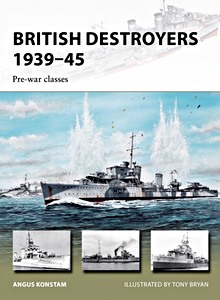
British Destroyers 1939-45 : Pre-war classes (Osprey)

Królewska Marynarka Wojenna przystąpiła do II wojny światowej z dużą, ale eklektyczną flotą niszczycieli. Niektóre z nich były weteranami I wojny światowej, nadającymi się jedynie do zadań eskortowych. Większość jednak została zbudowana w okresie międzywojennym i uchodziła za niezawodne i wszechstronne.

Niebezpieczeństwo czyhało jednak na morzach, ponieważ nowe niszczyciele budowane w Niemczech, Włoszech i Japonii były większe i lepiej opancerzone. Do czasu wejścia do służby nowych, większych niszczycieli klasy Tribal, okręty te musiały utrzymać linię frontu. Używane głównie do polowania na okręty podwodne, ochrony konwojów przed atakami z powietrza i niszczenia innych niszczycieli, okręty te służyły na całym świecie podczas wojny.

To bogato ilustrowane studium jest pierwszą częścią dwuczęściowego cyklu o prawdziwych "koniach roboczych" Royal Navy z czasów wojny. Skupia się ono na tym, jak te starzejące się okręty stawiły czoła potężnym flotom państw Osi.

Szczegóły

Autor:Angus Konstam
Wydanie:48 stron, 25 x 18.5 x 0.8 cm, miękka oprawa
Ilustracje:30 zdjęć czarno-białych i 10 kolorowych
Język:angielski
Wydawca:Osprey Publishing (GB, 2017)
Seria:New Vanguard (246)
ISBN:9781472816368
Okładka książki: British Destroyers 1939-45 : Pre-war classes | New Vanguard (246) | Osprey

British Destroyers 1939-45 : Pre-war classes

Język: angielski

Sprawdź cenę i dostępność:
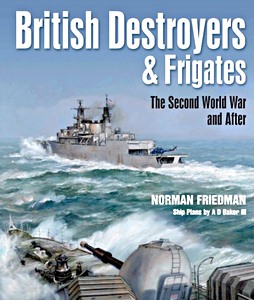
British Destroyers and Frigates : The Second World War and After

Since the Second World War the old categories of British destroyer and frigate have tended to merge, a process that this book traces back to the radically different Tribal class destroyers of 1936.
It deals with the development of all the modern destroyer classes that fought the war, looks at the emergency programmes that produced vast numbers of trade protection vessels - sloops, corvettes and frigates - then analyses the pressures that shaped the post-war fleet, and continued to dominate design down to recent years.

Written by America's leading authority, it is an objective but sympathetic view of the difficult economic and political environment in which British designers had to work, and benefits from the author's ability to compare and contrast the US Navy's experience.

Norman Friedman is renowned for his ability to explain the policy and strategy changes that drive design decisions, and his latest book uses previously unpublished material to draw a new and convincing picture of British naval policy over the previous seventy years and more. Hugely successful with enthusiasts and professionals alike from its first publication in 2006, this paperback is the book's third printing.

Szczegóły

Autor:Norman Friedman
Wydanie:352 stron, 29 x 24.5 cm, miękka oprawa
Ilustracje:200+ czarno-białych zdjęć, rysunki profilowe
Język:angielski
Wydawca:Pen & Sword Books Ltd (GB, 2017)
ISBN:9781526702821
Okładka książki: British Destroyers and Frigates : The Second World War and After | Pen & Sword

British Destroyers and Frigates : The Second World War and After

Język: angielski

Sprawdź cenę i dostępność:

British Guided Missile Destroyers : County-Class, Type 82, Type 42 and Type 45 (Osprey)

W latach po II wojnie światowej nowa technologia pocisków kierowanych umożliwiła okrętom nawodnym niszczenie zagrożeń powietrznych z daleka, dzięki czemu okręty te zachowały swoją rolę w wojnie morskiej.

Niniejsza książka analizuje technologię i osiągi bojowe brytyjskich niszczycieli rakietowych na przestrzeni półwiecza. Co wyjątkowe wśród współczesnych niszczycieli, trzy z nich zostały przetestowane w walce z samolotami i pociskami innej nowoczesnej marynarki wojennej - w wojnie o Falklandy - a także były używane podczas wojny w Zatoce Perskiej.

Książka napisana przez eksperta w dziedzinie brytyjskiej technologii morskiej ocenia zmiany, jakie zaszły w technologii niszczycieli Royal Navy na przestrzeni półwiecza, w tym omawia najnowszy i najnowocześniejszy okręt wojenny Royal Navy, Type 45.

Spis treści: Wstęp: zagrożenie powietrzne na morzu i pociski obronne - Niszczyciele klasy County - Niszczyciel typu 82: HMS Bristol - Niszczyciele typu 42: Niszczyciele klasy Sheffield - Niszczyciele typu 45: Niszczyciele klasy Daring - Służba operacyjna - Wnioski - Bibliografia - Indeks.

Szczegóły

Autor:Edward Hampshire, Paul Wright
Wydanie:48 stron, 25 x 18.5 x 0.5 cm, miękka oprawa
Ilustracje:20 zdjęć czarno-białych i 27 kolorowych
Język:angielski
Wydawca:Osprey Publishing (GB, 2016)
Seria:New Vanguard (234)
ISBN:9781472811165
Okładka książki: British Guided Missile Destroyers : County-Class, Type 82, Type 42 and Type 45 | New Vanguard (234) | Osprey

British Guided Missile Destroyers : County-Class, Type 82, Type 42 and Type 45

Język: angielski

Sprawdź cenę i dostępność:

HMS Bristol: In a class of her own

The Type 82 Destroyer HMS Bristol was born in a blaze of glory as lead ship in a proposed class of four - designed to escort a new generation of super carriers for the Royal Navy. The carriers never materialised and neither did the other Type 82s, leaving Bristol literally in a class of her own.
Completed as a trials ship for new equipment, she was at one point the best-armed and best-equipped vessel in the fleet.

This book covers the ship's political background and eventual acceptance into service, her various roles and equipment trials, her deployments - including during the Falklands War in the South Atlantic, where she was flagship for a time - her withdrawal from the operational fleet, her second life as an accommodation and training ship and her decommissioning in 2020.

Author Rob Griffin presents the story of HMS Bristol complete with a wealth of rare photos and tales from those who served on board.

Szczegóły

Autor:Rob Griffin
Wydanie:144 stron, 25.5 x 19 x 0.6 cm, twarda oprawa
Ilustracje:bogato ilustrowana
Język:angielski
Wydawca:Mortons Media Group (GB, 2022)
ISBN:9781911658757
Okładka książki: HMS Bristol: In a class of her own | Mortons

HMS Bristol: In a class of her own

Język: angielski

Sprawdź cenę i dostępność:
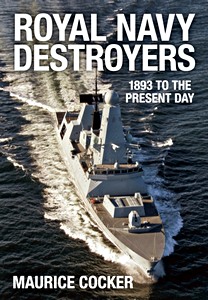
Royal Navy Destroyers - 1893 to the Present Day

In 1870 the British Admiralty commended to Parliament the weapon known as the 'Hydrostatic Torpedo', a weapon of surprise and stealth that required a small, speedy craft to launch it, especially in the early days when its range was only half a nautical mile, and thus came to be built HMS Lightning, the first torpedo boat for the Royal Navy.

The potential for the weapon was soon realised and the Admiralty was obliged to find a new design to accommodate it. In 1873 the 'torpedo boat destroyer' was born.
The TBD became indispensable to the navies of the world and in two world wars its importance both as an offensive and defensive weapon for fleet and convoy escort duties showed that no task at sea was too much for the destroyer.
The post-war Royal Navy has seen cutbacks and increased sophistication.

The destroyer - now larger and armed with guided missiles - has seen both, and in this revised and updated second edition Maurice Cocker charts its history, providing much new information and a comprehensive record of the history and appearance of each class. An invaluable reference book for all maritime historians.

Szczegóły

Autor:Maurice Cocker
Wydanie:160 stron, 24.5 x 17.5 x 1.2 cm, miękka oprawa
Ilustracje:ilustrowany
Język:angielski
Wydawca:The History Press Ltd (GB, 2011)
ISBN:9780752461595
Okładka książki: Royal Navy Destroyers - 1893 to the Present Day | The History Press

Royal Navy Destroyers - 1893 to the Present Day

Język: angielski

Sprawdź cenę i dostępność:
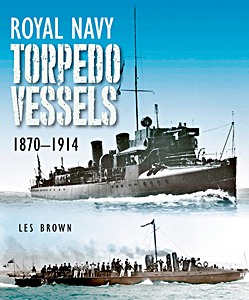
Royal Navy Torpedo Vessels 1870 - 1914

The self-propelled or locomotive torpedo was probably the greatest game-changer in the history of naval warfare. For the first time the largest warship could be sunk by a weapon carried by the smallest, and most navies were quick to see the potential.
Although the 19th-century Royal Navy had a reputation for technological conservatism, it was an 'early adopter' of the torpedo and was instrumental in the development of the small fast craft that became the delivery system of choice, the steam torpedo boat.
Britain's most important contribution to torpedo warfare, however, was the invention of its antidote, the torpedo boat destroyer, or 'destroyer' as it came to be called. This often-told story has overshadowed the earlier but no less significant history of the torpedo boat itself in the Royal Navy, an injustice set to right by this book.

Torpedoes were derived from earlier underwater explosive devices - mines, spar and towed torpedoes, and the like - so the first chapter briefly reviews their history before moving on to Robert Whitehead's revolutionary invention that made the self-propelled torpedo a practical weapon.
The Admiralty was so impressed it purchased the rights to Whitehead's device, and thereafter the Royal Navy made much of the early running in torpedo boat design. In this they were greatly assisted by existing boatbuilders like Thornycroft and Yarrow who already specialised in small fast craft.

The core of this book is a detailed developmental history of British torpedo craft, from the early experiments like Vesuvius and Polyphemus, through the 1st Class TBs to the so-called Coastal Destroyers of the early 20th century. There are also separate chapters on 2nd Class boats, on Torpedo Gunboats and on the 'Torpedo Depot Ships' Hecla and Vulcan.
The book concludes with a number of appendices devoted to background issues like quick-firing guns and reports on performance of the boats in various circumstances.
As it fills a surprising gap in the technical history of British warships, this book will be welcomed by naval enthusiasts, modelmakers and historians.

Szczegóły

Autor:Les Brown
Wydanie:192 stron, 26.5 x 22 x 2.3 cm, twarda oprawa
Ilustracje:200 czarno-białych zdjęć, 8 strony kolorowe
Język:angielski
Wydawca:Seaforth Publishing (GB, 2023)
ISBN:9781399022859
Okładka książki: Royal Navy Torpedo Vessels 1870 - 1914 | Seaforth

Royal Navy Torpedo Vessels 1870 - 1914

Język: angielski

Sprawdź cenę i dostępność:
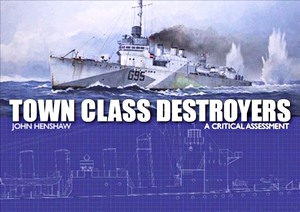
Town Class Destroyers - A Critical Assessment

Early in World War II, fifty obsolete US Navy destroyers were transferred to the Royal Navy in return for a 99-year lease British bases in the Caribbean, Bahamas and Newfoundland. Though they were obsolete and far from ideal, they played a vital role in the Royal Navy's campaign. This is their complete story.

Topics covered include the background to the acquisition of the ships - the Battle of the Atlantic; their specification and design, and modifications in RN service; operations and achievements, such as the St Nazaire Raid and finally, losses and accidents. This authoritative text is supported by many contemporary photographs and twenty eight detailed plans prepared specially for this book.

Szczegóły

Autor:John Henshaw
Wydanie:96 stron, 22 x 30.5 x 1.6 cm, twarda oprawa
Ilustracje:50 czarno-białych zdjęć, 28 rysunków profilowych
Język:angielski
Wydawca:The Crowood Press Ltd (GB, 2018)
ISBN:9781785004018
Okładka książki: Town Class Destroyers - A Critical Assessment | Crowood

Town Class Destroyers - A Critical Assessment

Język: angielski

Sprawdź cenę i dostępność:

Inne książki z tej kategorii:

Okładka książki: E-boat vs MTB - The English Channel 1941-45 | Duel (34)

E-boat vs MTB - The English Channel 1941-45

Gordon Williamson | angielski | miękka oprawa | 80 str. | 2011

Okładka książki: British Motor Gun Boat 1939-45 | New Vanguard (166)

British Motor Gun Boat 1939-45

Angus Konstam | angielski | miękka oprawa | 48 str. | 2010

Okładka książki: Dog Boats at War - Royal Navy D Class MTBs and MGBs 1939-1945

Dog Boats at War - Royal Navy D Class MTBs and MGBs 1939-1945

Leonard C. Reynolds | angielski | miękka oprawa | 304 str. | 2009

Okładka książki: British Motor Torpedo Boat 1939-45 | New Vanguard (74)

British Motor Torpedo Boat 1939-45

Angus Konstam | angielski | miękka oprawa | 48 str. | 2003