Buques de guerra (GM I) - Gran Bretaña: libros - historia

¿Un libro sobre buques de guerra de la Royal Navy? Aquí encontrarás los libros sobre la historia y tipos de buques de guerra de Gran Bretaña de la 1a Guerra Mundial.

¡Recomendaciones de libros independientes! Compras realizadas a través de nuestros enlaces apoyan nuestro trabajo, sin ningún coste adicional para ti. Más información >

Blocking of Zeebrugge - Operation Z-O 1918 (Osprey)

On the night of 22-23 April 1918 the Royal Navy carried out a raid on the German held ports of Zeebrugge and Ostend - Operation Z-O. Under the cover of clouds and smoke, over 70 ships and an assault force of 1,800 Royal Marines embarked on a daring mission which involved a vicious battle of incredible intensity.
However, despite the gallant and courageous efforts of the attackers, 11 of whom were later awarded the Victoria Cross, the raid was only partly successful.

Discover the successes and failures of this dramatic raid in this in-depth account, complete with specially commissioned battlescene artwork. The author reveals how despite failure, the raid demonstrated to Germany that Britain was still capable of offensive action, even as its armies were being forced back.

Detalle del libro

Autor:Stephen Prince
Presentación:64 páginas, 24.5 x 18.5 x 0.5 cm, tapa blanda
Ilustración:ricamente ilustrado con fotos y dibujos (en b/n y color)
Idioma:Inglés
Editorial:Osprey Publishing (GB, 2010)
Colección:Raid (7)
ISBN:9781846034534
Portada del libro: Blocking of Zeebrugge - Operation Z-O 1918 | Raid (7) | Osprey

Blocking of Zeebrugge - Operation Z-O 1918

Idioma: Inglés

Consultar precio y disponibilidad:

Jutland 1916 : The Archaeology of a Naval Battlefield

La batalla de Jutlandia fue la mayor batalla naval y el único enfrentamiento a gran escala entre acorazados en la Primera Guerra Mundial. Durante años, los múltiples factores que contribuyeron a la pérdida de muchos de los barcos siguieron siendo un misterio, sujetos únicamente a especulaciones y teorías.

En este libro, el arqueólogo marino e historiador Dr. Innes McCartney revela por primera vez qué fue de los buques de guerra que desaparecieron la noche del 31 de mayo de 1916, examinando las circunstancias que rodearon la pérdida de cada barco y conciliando lo que se sabía en 1916 con lo que la arqueología está revelando hoy.
El conocimiento sobre lo que estaba presente se transformó en 2015 gracias a un estudio pionero que utilizó la moderna tecnología multihaz. Esto ayudó enormemente a desentrañar los detalles detrás de varios enigmas de Jutlandia, en particular las devastadoras explosiones que se cobraron la vida de cinco importantes buques de guerra británicos, los detalles de los restos de los 13 destructores perdidos en la batalla y los buques de guerra alemanes hundidos durante la fase nocturna.

Este es el primer libro que identifica la ubicación de muchos de los naufragios y, escandalosamente, cómo más de la mitad de estos yacimientos han sido saqueados ilegalmente para obtener materiales de salvamento, a pesar de su condición de tumbas de guerra. Una lectura esencial y reveladora para cualquier persona interesada en la historia naval y la arqueología marina.

Detalle del libro

Autor:Dr Innes McCartney
Presentación:272 páginas, 24.5 x 19 cm, tapa dura
Ilustración:ricamente ilustrado con fotos en b/n y color
Idioma:Inglés
Editorial:Osprey Publishing (GB, 2016)
ISBN:9781472835413
Portada del libro: Jutland 1916 : The Archaeology of a Naval Battlefield | Osprey

Jutland 1916 : The Archaeology of a Naval Battlefield

Idioma: Inglés

Consultar precio y disponibilidad:

Q Ship vs U-Boat - 1914-18 (Osprey)

Los barcos Q venían en todas las formas y tamaños: vapores costeros, arrastreros, barcas, yates o goletas. Pero todos debían parecer inofensivos para atraer a sus oponentes a la superficie e incitarlos a atacar. El armamento variaba según el tamaño del barco. Los vapores solían tener cañones de 4 pulgadas montados en el centro y en la proa, los arrastreros cañones de 3 libras y los veleros cañones de 12 libras.

Quienes servían en los buques Q debían aceptar que sus adversarios, los submarinos alemanes, podrían atacar primero. Los capitanes de los buques Q mantenían preparada una «tripulación de pánico», entrenada para simular una evacuación elaborada y convencer al comandante del submarino de que la tripulación estaba abandonando el barco. El capitán del buque Q se quedaba atrás con un puñado de tripulantes manejando los cañones, que permanecían ocultos hasta el momento más oportuno para desenmascararlos y atacar al submarino.

El concepto de buque Q surgió al principio de la guerra, cuando ningún otro método parecía capaz de contrarrestar la amenaza de los submarinos alemanes, y floreció hasta que se desarrollaron, probaron e implementaron nuevas tecnologías y tácticas.

Contenido: Introducción - Cronología - Diseño y desarrollo - La situación estratégica - Especificaciones técnicas - Los combatientes - Combate - Estadísticas y análisis - Consecuencias - Bibliografía - Índice.

Detalle del libro

Autor:David Greentree
Presentación:80 páginas, 25 x 19 x 0.7 cm, tapa blanda
Ilustración:ricamente ilustrado con fotos y dibujos (en b/n y color)
Idioma:Inglés
Editorial:Osprey Publishing (GB, 2014)
Colección:Duel (57)
ISBN:9781782002840
Portada del libro: Q Ship vs U-Boat - 1914-18 | Duel (57) | Osprey

Q Ship vs U-Boat - 1914-18

Idioma: Inglés

Consultar precio y disponibilidad:
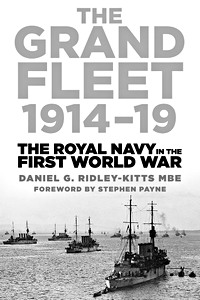
The Grand Fleet 1914-19 - The Royal Navy in the First World War

During the First World War the reputation of the British Royal Navy was put on the line in its defence of the country, and, crucially, it was in those years, 1914-19, that the Grand Fleet became the single most potent weapon of war of any nation.

In this comprehensive, illustrated history, Ridley-Kitts tells of the creation and development of the Grand Fleet under the drive of the energetic and charismatic Admiral of the Fleet 'Jacky' Fisher, who modernised the navy with the introduction of the revolutionary Dreadnought battleship. This type of vessel in particular made other nations' battleships obsolete, created a powerful weapon for the defence of the British Empire and its trade, and finally defeated the machinations of Kaiser William II.

Using unique illustrations rendered by the author, the story of the Grand Fleet is told in accessible narrative style, with outstanding technical detail that will satisfy naval enthusiasts.

Detalle del libro

Autor:Daniel George Ridley-Kitts
Presentación:288 páginas, 23.5 x 15.5 x 1.9 cm, tapa blanda
Ilustración:30 ilustraciones en b/n y 72 y color
Idioma:Inglés
Editorial:The History Press Ltd (GB, 2013)
ISBN:9780752488738
Portada del libro: The Grand Fleet 1914-19 - The Royal Navy in the First World War | The History Press

The Grand Fleet 1914-19 - The Royal Navy in the First World War

Idioma: Inglés

Consultar precio y disponibilidad:

The Royal Navy - 100 Years of Modern Warfare

This book examines how the Royal Navy protected Britain's shores and wider interests through the First World War and the one that was to follow, from the northern patrol lifelines of the Atlantic, Arctic and Mediterranean convoys and increasingly sophisticated amphibious operations that would mark it out in the Second.

The book ends with chapters on The Falklands War and Royal Navy's anti-piracy role and involvement in humanitarian crises. This visually stunning volume is complemented by 15 loose facsimile documents that include letters and diary entries, war reports and other items of memorabilia that bring an immediacy to the events being described.

Without the Royal Navy in two World Wars, Britain would have at best lost, and worst ceased to exist.

This book salutes the services' incredible achievements over the last 100 years.

Detalle del libro

Autor:Julian Thompson
Presentación:80 páginas, 30.5 x 26 x 3.4 cm, tapa dura
Ilustración:200 fotos en b/n y color
Idioma:Inglés
Editorial:Carlton Books Ltd (GB, 2016)
ISBN:9780233004860
Portada del libro: The Royal Navy - 100 Years of Modern Warfare | Carlton

The Royal Navy - 100 Years of Modern Warfare

Idioma: Inglés

Consultar precio y disponibilidad:
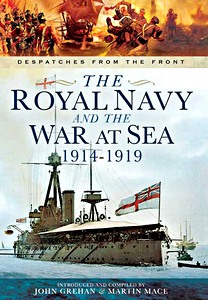
The Royal Navy and the War at Sea - 1914-1919 - Despatches from the Front

Germany's attempts to build a battleship fleet to match that of the United Kingdom, the dominant naval power on the 19th-century and an island country that depended on seaborne trade for survival, is often listed as a major reason for the enmity between those two countries that led to the outbreak of war in 1914.
Indeed, German leaders had expressed a desire for a navy in proportion to their military and economic strength that could free their overseas trade and colonial empire from dependence on Britain's good will, but such a fleet would inevitably threaten Britain's own trade and empire.

This unique collection of original documents will prove to be an invaluable resource for historians, students and all those interested in what was one of the most significant periods in British military history.
Despatches in this volume include those relating to the events at Antwerp in 1914, Royal Navy armoured car squadrons, the Battle of Dogger Bank, the Battle of the Falklands, the Battle of Heligoland Bight, minesweeping operations, Royal Naval Air Service operations and attacks, and, of course, the Battle of Jutland.

Detalle del libro

Autor:Martin Mace
Presentación:224 páginas, 23.5 x 15.5 cm, tapa dura
Ilustración:ilustrado
Idioma:Inglés
Editorial:Pen & Sword Books Ltd (GB, 2014)
ISBN:9781781593172
Portada del libro: The Royal Navy and the War at Sea - 1914-1919 - Despatches from the Front | Pen & Sword

The Royal Navy and the War at Sea - 1914-1919 - Despatches from the Front

Idioma: Inglés

Consultar precio y disponibilidad:

También te puede interesar:

Portada del libro: Dunkirk Little Ships

Dunkirk Little Ships

Nigel Sharp | Inglés | tapa blanda | 96 pág. | 2015

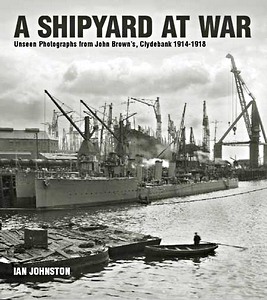
Portada del libro: A Shipyard at War - Unseen Photographs from John Brown's, Clydebank 1914 - 1918

A Shipyard at War - Unseen Photographs from John Brown's, Clydebank 1914 - 1918

Ian Johnston | Inglés | tapa dura | 192 pág. | 2014

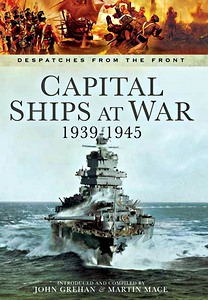
Portada del libro: Capital Ships at War, 1939-1945 - Despatches from the Front

Capital Ships at War, 1939-1945 - Despatches from the Front

John Grehan, Martin Mace | Inglés | tapa dura | 224 pág. | 2014

Portada del libro: The Ships of Scapa Flow

The Ships of Scapa Flow

Campbell McCutcheon | Inglés | tapa blanda | 96 pág. | 2013

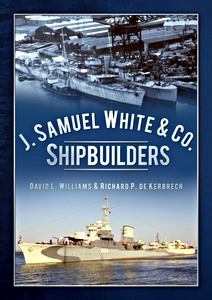
Portada del libro: J. Samuel White & Co., Shipbuilders

J. Samuel White & Co., Shipbuilders

David Williams, Richard P. de Kerbrech | Inglés | tapa blanda | 176 pág. | 2012