Destructores - Gran Bretaña: libros - historia y buques

¿Un libro sobre destructores de la Royal Navy? Aquí encontrarás los libros sobre la historia y tipos de destructores de Gran Bretaña.

¡Recomendaciones de libros independientes! Compras realizadas a través de nuestros enlaces apoyan nuestro trabajo, sin ningún coste adicional para ti. Más información >

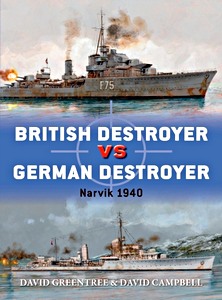
British Destroyer vs German Destroyer : Narvik 1940 (Osprey)

En los primeros meses de la Segunda Guerra Mundial, la Marina Real británica se enfrentó a una armada alemana resurgente, la Kriegsmarine. Tras la invasión alemana de Dinamarca y Noruega a principios de abril de 1940, destructores británicos y alemanes se enfrentaron en una serie de batallas por el control de la costa noruega.
El entorno operativo era especialmente exigente, ya que las tripulaciones de los destructores tenían que lidiar con condiciones meteorológicas variables, estrechas franjas costeras y la posibilidad de niebla y averías en los buques.

En dos enfrentamientos en Narvik, la Marina Real británica entró en el puerto y atacó a los destructores alemanes que merodeaban por la zona, quienes habían desembarcado tropas de montaña para apoyar la invasión alemana. Los ataques fueron devastadores, reduciendo a la mitad de un plumazo el número de tropas a disposición de Hitler.

Este fascinante estudio, que emplea ilustraciones encargadas especialmente para la ocasión y se basa en diversas fuentes, analiza la evolución de la tecnología y las tácticas empleadas por las fuerzas de destructores británicas y alemanas, y evalúa el impacto de los enfrentamientos de Narvik en el posterior desarrollo y despliegue de destructores por parte de ambos bandos en diversas funciones en los océanos del mundo.

Detalle del libro

Autor:David Greentree
Presentación:80 páginas, 25 x 18.5 cm, tapa blanda
Ilustración:ricamente ilustrado con fotos en b/n y color
Idioma:Inglés
Editorial:Osprey Publishing (GB, 2018)
Colección:Duel (88)
ISBN:9781472828583
Portada del libro: British Destroyer vs German Destroyer : Narvik 1940 | Duel (88) | Osprey

British Destroyer vs German Destroyer : Narvik 1940

Idioma: Inglés

Consultar precio y disponibilidad:
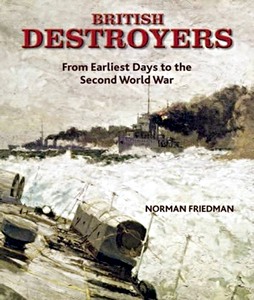
British Destroyers - From Earliest Days to the Second World War

In the late 19th century the advent of the modern torpedo woke the Royal Navy to a potent threat to its domination, not seriously challenged since Trafalgar. For the first time a relatively cheap weapon had the potential to sink the largest, and costliest exponents of sea power. Not surprisingly, Britain's traditional rivals invested heavily in the new technology that promised to overthrow the naval status quo.

The Royal Navy was also quick to adopt the new weapon, but the British concentrated on developing counters to the essentially offensive tactics associated with torpedo-carrying small craft. From these efforts came 'torpedo catchers', torpedo-gunboats and eventually the torpedo-boat destroyer, a type so successful that it eclipsed and the usurped the torpedo-boat itself. With its title shortened to 'destroyer', the type evolved rapidly and was soon in service in many navies, but in none was the evolution as rapid or as radical as in the Royal Navy

This book is the first detailed study of their early days, combining technical history with an appreciation of the changing role of destroyers and the tactics of their deployment. Like all of Friedman's books, it reveals the rationale and not just the process of important technological developments.

Detalle del libro

Autor:Norman Friedman
Presentación:320 páginas, 29.5 x 25.5 x 2.6 cm, tapa dura
Ilustración:300 ilustraciones b/n
Idioma:Inglés
Editorial:Seaforth Publishing (GB, 2009)
ISBN:9781848320499
Portada del libro: British Destroyers - From Earliest Days to the Second World War | Seaforth

British Destroyers - From Earliest Days to the Second World War

Idioma: Inglés

Consultar precio y disponibilidad:
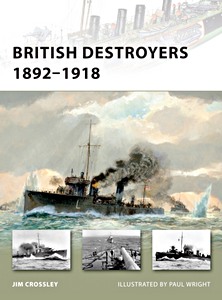
British Destroyers 1892-1918 (Osprey)

Presents the history of the first destroyers of the Royal Navy, which revolutionized the way war was fought at sea with new armaments and a great improvement on earlier designs. Moreover, between 1892, when the first destroyers were laid down, and 1918, destroyers evolved radically from 27-knot, 250-ton ships into 35-knot, 1,530-ton ships.

All these ships were involved in some form during World War I; the smaller, original destroyers in an auxiliary support role and the newer, larger destroyers at some of the greatest sea battles of the war.

This account highlights the role the destroyers played in the North Sea during the crucial battles to control the Heliogoland Bight, as well as the major fleet action at the battle of Jutland in 1916.
Complete with a detailed description of the technical evolution of each class of destroyer from the 27-knotters to the Tribal and Marksman classes, Jim Crossley offers a complete overview of the vessels that helped to maintain Britain's naval supremacy.

Detalle del libro

Autor:Jim Crossley
Presentación:48 páginas, 25 x 18.5 x 0.5 cm, tapa blanda
Ilustración:ricamente ilustrado con fotos y dibujos (en b/n y color)
Idioma:Inglés
Editorial:Osprey Publishing (GB, 2009)
Colección:New Vanguard (163)
ISBN:9781846035142
Portada del libro: British Destroyers 1892-1918 | New Vanguard (163) | Osprey

British Destroyers 1892-1918

Idioma: Inglés

Consultar precio y disponibilidad:
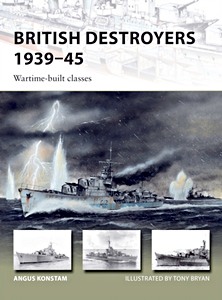
British Destroyers 1939-45 - Wartime-built classes (Osprey)

Ante la inminencia de la guerra en la década de 1930, el Almirantazgo británico buscó modernizar su flota de destructores para competir con los nuevos buques que estaban construyendo Alemania y Japón, lo que dio como resultado la puesta en servicio de la poderosa clase Tribal.
A esto le siguió el diseño del primero de varios barcos ligeramente más pequeños, que portaban menos cañones que los Tribals, pero estaban armados con un arsenal de torpedos mucho mayor.

A la primera de ellas, la clase 'J/K/M', le siguieron varias variantes de guerra, con ligeras modificaciones en su armamento para adaptarlas a diferentes funciones bélicas.

Diseñados para combatir buques de guerra de superficie, aviones y submarinos enemigos, los británicos construyeron estos destructores para hacer frente a cualquier cosa que el enemigo pudiera arrojarles.

Mediante una colección de fotografías contemporáneas y bellas ilustraciones a color, este es un nuevo y fascinante estudio de los barcos que formaron la columna vertebral de la Marina Real durante la Segunda Guerra Mundial.

Detalle del libro

Autor:Angus Konstam
Presentación:48 páginas, 25 x 18.5 x 0.5 cm, tapa blanda
Ilustración:ricamente ilustrado con fotos en b/n y color
Idioma:Inglés
Editorial:Osprey Publishing (GB, 2017)
Colección:New Vanguard (253)
ISBN:9781472825803
Portada del libro: British Destroyers 1939-45 - Wartime-built classes | New Vanguard (253) | Osprey

British Destroyers 1939-45 - Wartime-built classes

Idioma: Inglés

Consultar precio y disponibilidad:
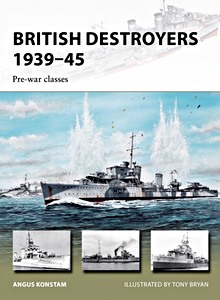
British Destroyers 1939-45 : Pre-war classes (Osprey)

La Marina Real Británica entró en la Segunda Guerra Mundial con una flota de destructores numerosa pero heterogénea. Algunos de ellos eran veteranos de la Primera Guerra Mundial, aptos únicamente para tareas de escolta. La mayoría, sin embargo, se habían construido durante el período de entreguerras y se consideraban fiables y versátiles.

Sin embargo, el peligro acechaba en los mares, ya que los nuevos destructores construidos en Alemania, Italia y Japón eran más grandes y estaban mejor blindados. Por lo tanto, hasta que los nuevos y más grandes destructores de la clase Tribal pudieran entrar en servicio, estos buques tendrían que mantener la línea. Utilizados principalmente para la caza de submarinos, la protección de convoyes contra ataques aéreos y la destrucción de otros destructores, estos barcos sirvieron en todo el mundo durante la guerra.

Este estudio profusamente ilustrado es la primera parte de una serie de dos volúmenes sobre los verdaderos buques de guerra de la Marina Real Británica, y se centra en cómo estos barcos veteranos se enfrentaron a las formidables armadas de las potencias del Eje.

Detalle del libro

Autor:Angus Konstam
Presentación:48 páginas, 25 x 18.5 x 0.8 cm, tapa blanda
Ilustración:30 fotos en b/n y 10 a color
Idioma:Inglés
Editorial:Osprey Publishing (GB, 2017)
Colección:New Vanguard (246)
ISBN:9781472816368
Portada del libro: British Destroyers 1939-45 : Pre-war classes | New Vanguard (246) | Osprey

British Destroyers 1939-45 : Pre-war classes

Idioma: Inglés

Consultar precio y disponibilidad:
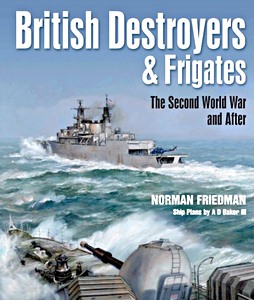
British Destroyers and Frigates : The Second World War and After

Since the Second World War the old categories of British destroyer and frigate have tended to merge, a process that this book traces back to the radically different Tribal class destroyers of 1936.
It deals with the development of all the modern destroyer classes that fought the war, looks at the emergency programmes that produced vast numbers of trade protection vessels - sloops, corvettes and frigates - then analyses the pressures that shaped the post-war fleet, and continued to dominate design down to recent years.

Written by America's leading authority, it is an objective but sympathetic view of the difficult economic and political environment in which British designers had to work, and benefits from the author's ability to compare and contrast the US Navy's experience.

Norman Friedman is renowned for his ability to explain the policy and strategy changes that drive design decisions, and his latest book uses previously unpublished material to draw a new and convincing picture of British naval policy over the previous seventy years and more. Hugely successful with enthusiasts and professionals alike from its first publication in 2006, this paperback is the book's third printing.

Detalle del libro

Autor:Norman Friedman
Presentación:352 páginas, 29 x 24.5 cm, tapa blanda
Ilustración:200+ fotos en b/n, dibujos de perfil
Idioma:Inglés
Editorial:Pen & Sword Books Ltd (GB, 2017)
ISBN:9781526702821
Portada del libro: British Destroyers and Frigates : The Second World War and After | Pen & Sword

British Destroyers and Frigates : The Second World War and After

Idioma: Inglés

Consultar precio y disponibilidad:

British Guided Missile Destroyers : County-Class, Type 82, Type 42 and Type 45 (Osprey)

En los años posteriores a la Segunda Guerra Mundial, la nueva tecnología de misiles guiados ofreció a los buques de superficie la oportunidad de destruir amenazas aéreas desde la distancia, preservando así su papel en la guerra naval.

Este libro examina la tecnología y el desempeño en combate de los destructores británicos de misiles guiados a lo largo de medio siglo. De manera excepcional entre los destructores modernos, tres de estas clases fueron probadas en combate contra los aviones y misiles de otra armada moderna - en la Guerra de las Malvinas -, además de haber sido desplegadas durante la Guerra del Golfo.

Escrito por un experto en tecnología naval británica, este libro analiza la evolución tecnológica de los destructores de la Royal Navy a lo largo de medio siglo, incluyendo un examen del buque de guerra más nuevo y capaz de la Royal Navy, el Tipo 45.

Contenido: Introducción: la amenaza aérea marítima y el misil defensivo - Los destructores de la clase County - El destructor Tipo 82: HMS Bristol - Los destructores Tipo 42: clase Sheffield - Los destructores Tipo 45: clase Daring - Servicio operativo - Conclusión - Bibliografía - Índice.

Detalle del libro

Autor:Edward Hampshire, Paul Wright
Presentación:48 páginas, 25 x 18.5 x 0.5 cm, tapa blanda
Ilustración:20 fotos en b/n y 27 a color
Idioma:Inglés
Editorial:Osprey Publishing (GB, 2016)
Colección:New Vanguard (234)
ISBN:9781472811165
Portada del libro: British Guided Missile Destroyers : County-Class, Type 82, Type 42 and Type 45 | New Vanguard (234) | Osprey

British Guided Missile Destroyers : County-Class, Type 82, Type 42 and Type 45

Idioma: Inglés

Consultar precio y disponibilidad:

HMS Bristol: In a class of her own

The Type 82 Destroyer HMS Bristol was born in a blaze of glory as lead ship in a proposed class of four - designed to escort a new generation of super carriers for the Royal Navy. The carriers never materialised and neither did the other Type 82s, leaving Bristol literally in a class of her own.
Completed as a trials ship for new equipment, she was at one point the best-armed and best-equipped vessel in the fleet.

This book covers the ship's political background and eventual acceptance into service, her various roles and equipment trials, her deployments - including during the Falklands War in the South Atlantic, where she was flagship for a time - her withdrawal from the operational fleet, her second life as an accommodation and training ship and her decommissioning in 2020.

Author Rob Griffin presents the story of HMS Bristol complete with a wealth of rare photos and tales from those who served on board.

Detalle del libro

Autor:Rob Griffin
Presentación:144 páginas, 25.5 x 19 x 0.6 cm, tapa dura
Ilustración:ricamente ilustrado
Idioma:Inglés
Editorial:Mortons Media Group (GB, 2022)
ISBN:9781911658757
Portada del libro: HMS Bristol: In a class of her own | Mortons

HMS Bristol: In a class of her own

Idioma: Inglés

Consultar precio y disponibilidad:
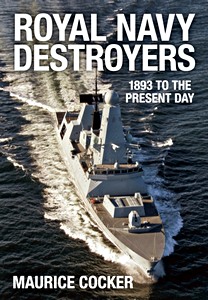
Royal Navy Destroyers - 1893 to the Present Day

In 1870 the British Admiralty commended to Parliament the weapon known as the 'Hydrostatic Torpedo', a weapon of surprise and stealth that required a small, speedy craft to launch it, especially in the early days when its range was only half a nautical mile, and thus came to be built HMS Lightning, the first torpedo boat for the Royal Navy.

The potential for the weapon was soon realised and the Admiralty was obliged to find a new design to accommodate it. In 1873 the 'torpedo boat destroyer' was born.
The TBD became indispensable to the navies of the world and in two world wars its importance both as an offensive and defensive weapon for fleet and convoy escort duties showed that no task at sea was too much for the destroyer.
The post-war Royal Navy has seen cutbacks and increased sophistication.

The destroyer - now larger and armed with guided missiles - has seen both, and in this revised and updated second edition Maurice Cocker charts its history, providing much new information and a comprehensive record of the history and appearance of each class. An invaluable reference book for all maritime historians.

Detalle del libro

Autor:Maurice Cocker
Presentación:160 páginas, 24.5 x 17.5 x 1.2 cm, tapa blanda
Ilustración:ilustrado
Idioma:Inglés
Editorial:The History Press Ltd (GB, 2011)
ISBN:9780752461595
Portada del libro: Royal Navy Destroyers - 1893 to the Present Day | The History Press

Royal Navy Destroyers - 1893 to the Present Day

Idioma: Inglés

Consultar precio y disponibilidad:
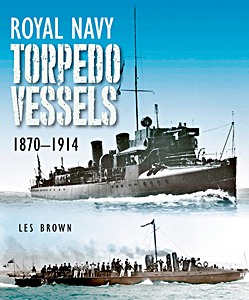
Royal Navy Torpedo Vessels 1870 - 1914

The self-propelled or locomotive torpedo was probably the greatest game-changer in the history of naval warfare. For the first time the largest warship could be sunk by a weapon carried by the smallest, and most navies were quick to see the potential.
Although the 19th-century Royal Navy had a reputation for technological conservatism, it was an 'early adopter' of the torpedo and was instrumental in the development of the small fast craft that became the delivery system of choice, the steam torpedo boat.
Britain's most important contribution to torpedo warfare, however, was the invention of its antidote, the torpedo boat destroyer, or 'destroyer' as it came to be called. This often-told story has overshadowed the earlier but no less significant history of the torpedo boat itself in the Royal Navy, an injustice set to right by this book.

Torpedoes were derived from earlier underwater explosive devices - mines, spar and towed torpedoes, and the like - so the first chapter briefly reviews their history before moving on to Robert Whitehead's revolutionary invention that made the self-propelled torpedo a practical weapon.
The Admiralty was so impressed it purchased the rights to Whitehead's device, and thereafter the Royal Navy made much of the early running in torpedo boat design. In this they were greatly assisted by existing boatbuilders like Thornycroft and Yarrow who already specialised in small fast craft.

The core of this book is a detailed developmental history of British torpedo craft, from the early experiments like Vesuvius and Polyphemus, through the 1st Class TBs to the so-called Coastal Destroyers of the early 20th century. There are also separate chapters on 2nd Class boats, on Torpedo Gunboats and on the 'Torpedo Depot Ships' Hecla and Vulcan.
The book concludes with a number of appendices devoted to background issues like quick-firing guns and reports on performance of the boats in various circumstances.
As it fills a surprising gap in the technical history of British warships, this book will be welcomed by naval enthusiasts, modelmakers and historians.

Detalle del libro

Autor:Les Brown
Presentación:192 páginas, 26.5 x 22 x 2.3 cm, tapa dura
Ilustración:200 fotos en b/n, 8 páginas y color
Idioma:Inglés
Editorial:Seaforth Publishing (GB, 2023)
ISBN:9781399022859
Portada del libro: Royal Navy Torpedo Vessels 1870 - 1914 | Seaforth

Royal Navy Torpedo Vessels 1870 - 1914

Idioma: Inglés

Consultar precio y disponibilidad:
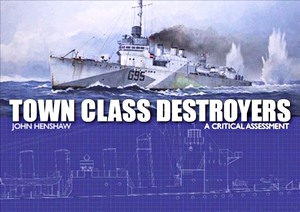
Town Class Destroyers - A Critical Assessment

Early in World War II, fifty obsolete US Navy destroyers were transferred to the Royal Navy in return for a 99-year lease British bases in the Caribbean, Bahamas and Newfoundland. Though they were obsolete and far from ideal, they played a vital role in the Royal Navy's campaign. This is their complete story.

Topics covered include the background to the acquisition of the ships - the Battle of the Atlantic; their specification and design, and modifications in RN service; operations and achievements, such as the St Nazaire Raid and finally, losses and accidents. This authoritative text is supported by many contemporary photographs and twenty eight detailed plans prepared specially for this book.

Detalle del libro

Autor:John Henshaw
Presentación:96 páginas, 22 x 30.5 x 1.6 cm, tapa dura
Ilustración:50 fotos en b/n, 28 dibujos de perfil
Idioma:Inglés
Editorial:The Crowood Press Ltd (GB, 2018)
ISBN:9781785004018
Portada del libro: Town Class Destroyers - A Critical Assessment | Crowood

Town Class Destroyers - A Critical Assessment

Idioma: Inglés

Consultar precio y disponibilidad:

También te puede interesar:

Portada del libro: E-boat vs MTB - The English Channel 1941-45 | Duel (34)

E-boat vs MTB - The English Channel 1941-45

Gordon Williamson | Inglés | tapa blanda | 80 pág. | 2011

Portada del libro: British Motor Gun Boat 1939-45 | New Vanguard (166)

British Motor Gun Boat 1939-45

Angus Konstam | Inglés | tapa blanda | 48 pág. | 2010

Portada del libro: Dog Boats at War - Royal Navy D Class MTBs and MGBs 1939-1945

Dog Boats at War - Royal Navy D Class MTBs and MGBs 1939-1945

Leonard C. Reynolds | Inglés | tapa blanda | 304 pág. | 2009

Portada del libro: British Motor Torpedo Boat 1939-45 | New Vanguard (74)

British Motor Torpedo Boat 1939-45

Angus Konstam | Inglés | tapa blanda | 48 pág. | 2003