Al comprar mediante los enlaces, apoyas este sitio sin coste adicional para usted. Más información >

Vehículos militares - Austria: libros - historia, modelos y técnica

¿Un libro sobre vehículos militares de Austria? Aquí encontrarás los mejores libros sobre la historia, los tipos y la técnica de vehículos militares.

Austrian Napoleonic Artillery 1792–1815 (Osprey)

The Austrian artillery of the Revolutionary and Napoleonic Wars was a creation of the renowned Lichtenstein system of the early 1750s. This weight system produced a series of weapons of 3-, 6- and 12-pdr. calibre along with 7- and 10-pdr. howitzers.
In the 1780s they were joined by Cavalry artillery guns with their Wurst seats. In 1811 Austria also began the establishment of rocket troops based upon the British invention, whilst their heavy and siege pieces remained the 12 -,18- and 24-pdrs throughout the period.

This book describes the system as well as its operational use during the Napoleonic Wars.

Contents: Introduction - Organisation - The Lichtenstein system - The Cavalry Artillery Guns - Tactics and Massed Batteries - The Rockets - The Siege Guns - Bibliography and Collections - Colour plate commentary - Index.

Detalle del libro

Autor:David Hollins
Presentación:48 páginas, 24.5 x 18.5 x 0.5 cm, tapa blanda
Ilustración:ricamente ilustrado con fotos y dibujos (en b/n y color)
Idioma:Inglés
Editorial:Osprey Publishing (GB, 2003)
Colección:New Vanguard (72)
ISBN:9781841764993
Portada del libro: Austrian Napoleonic Artillery 1792–1815 | New Vanguard (72) | Osprey

Austrian Napoleonic Artillery 1792–1815

Idioma: Inglés

Skoda Heavy Guns - 24 cm Cannon, 38 cm Howitzer, 42 cm Howitzer and Gasoline-electric Trains

Este libro explora la historia de Skoda Works, el segundo mayor fabricante de armas de Europa, y su artillería pesada: el cañón de 24 cm, el obús de 38 cm y el obús de 42 cm.
También trata sobre los cañones que se transportaron de manera única con trenes gasolina-eléctricos Austro-Daimler, diseñados por Ferdinand Porsche.

Detalle del libro

Autor:Michael Prasil
Presentación:144 páginas, 28 x 21.5 x 1.1 cm, tapa blanda
Ilustración:100+ fotos en b/n, dibujos
Idioma:Inglés
Editorial:Schiffer Publishing Ltd (USA, 2004)
ISBN:9780764302886
Portada del libro: Skoda Heavy Guns - 24 cm Cannon, 38 cm Howitzer, 42 cm Howitzer and Gasoline-electric Trains | Schiffer

Skoda Heavy Guns - 24 cm Cannon, 38 cm Howitzer, 42 cm Howitzer and Gasoline-electric Trains

Idioma: Inglés

100 Jahre Panzerwaffe im österreichischen Heer

The history of the Austrian Panzerwaffe. A story of political and military mistakes, but also a story of technical masterpieces of Austrian military technology, which produced revolutionary developments (from the world's first wheeled tank to the world's first battle tank to the world's most modern infantry fighting vehicle).

An Austrian fate. It is hard to imagine how history would have turned out differently if those responsible had appreciated the value of these developments from the very beginning. For long periods of time, the inventive spirit of industry was stifled and the army was denied the (vital) equipment and weapons it needed.

This book aims to show the success story of the Austrian Panzerwaffe and domestic military technology. However, it is also intended to give the soldiers and technicians of all ranks who achieved these feats and who established the outstanding reputation of the Austrian Panzerwaffe worldwide the recognition they deserve...

Detalle del libro

Autor:Rolf M. Urrisk-Obertynski
Presentación:352 páginas, 27 x 22.5 x 3.2 cm, tapa dura
Ilustración:500+ fotos en b/n y color
Idioma:Alemán
Editorial:Weishaupt Verlag (A, 2006)
ISBN:9783705902381
Portada del libro: 100 Jahre Panzerwaffe im österreichischen Heer | Weishaupt

100 Jahre Panzerwaffe im österreichischen Heer

Idioma: Alemán

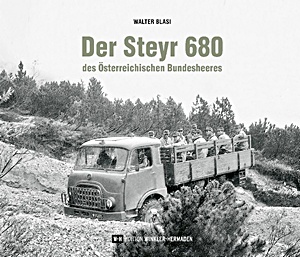
Der Steyr 680 des Österreichischen Bundesheeres

Desde finales de la década de 1960, el Steyr 680 fue el principal vehículo de transporte del ejército austriaco. Se utilizaba sobre todo para llevar material y tropas, con espacio para conductor, copiloto y hasta 18 soldados.
La versión militar se basó en modelos civiles y reemplazó al menos potente Steyr 580 g.

Se produjeron dos variantes: de dos ejes y de tres ejes. Al principio se probó solo la de dos ejes, pero la comparación con el GMC estadounidense hizo necesaria la de tres ejes.
Durante casi 40 años de servicio, el Steyr 680 se convirtió, junto con el Haflinger y el Pinzgauer, en uno de los vehículos militares más conocidos de Austria.

Detalle del libro

Autor:Walter Blasi
Presentación:116 páginas, 20 x 23.5 x 1.4 cm, tapa dura
Ilustración:135 fotos en b/n y color
Idioma:Alemán
Editorial:Edition Winkler-Hermaden (A, 2024)
ISBN:9783951976242
Portada del libro: Der Steyr 680 des Österreichischen Bundesheeres | Edition Winkler-Hermaden

Der Steyr 680 des Österreichischen Bundesheeres

Idioma: Alemán

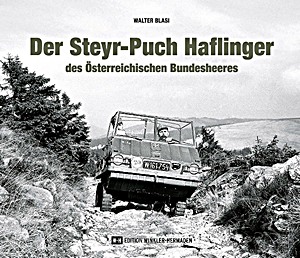
Der Steyr-Puch Haflinger des Österreichischen Bundesheeres

El Steyr-Puch Haflinger es ahora un vehículo de culto. Su hogar museístico es el Museo Puch en Graz, donde se exhiben muchas variantes. Todavía se puede ver en la carretera, y gracias a Internet, hay una comunidad global de fanáticos del Haflinger.

Walter Blasi describe en su libro el largo camino de este vehículo para convertirse en un pilar clave de las Fuerzas Armadas de Austria. Los cimientos del Haflinger se establecieron en 1956, y los primeros prototipos se construyeron en 1957.
Las pruebas realizadas por el departamento de pruebas de Graz atrajeron gran interés público. En 1959, el vehículo entró en producción en serie como el "Haflinger Tipo 700 AP".
El nombre "Haflinger" proviene de un caballo de montaña bien probado de las fuerzas armadas y fue acuñado espontáneamente durante una demostración. Desde 1958, el vehículo fue probado en varias unidades militares.
El Haflinger se utilizó para comandantes, puestos de mando y pequeños equipos de radio. La versión estándar era de cuatro asientos, el Haflinger de radio de tres asientos.
El vehículo se convirtió en un éxito de exportación militar. El 80 % de la producción se exportó a 110 países. En la década de 1970, muchos vehículos se exportaron a África. La disminución de la demanda se compensó gradualmente con pedidos de su hermano mayor, el Pinzgauer.

Detalle del libro

Autor:Walter Blasi
Presentación:116 páginas, 20.5 x 24 x 1.5 cm, tapa dura
Ilustración:ricamente ilustrado con fotos en b/n y color
Idioma:Alemán
Editorial:Edition Winkler-Hermaden (A, 2020)
ISBN:9783950472097
Portada del libro: Der Steyr-Puch Haflinger des Österreichischen Bundesheeres | Edition Winkler-Hermaden

Der Steyr-Puch Haflinger des Österreichischen Bundesheeres

Idioma: Alemán

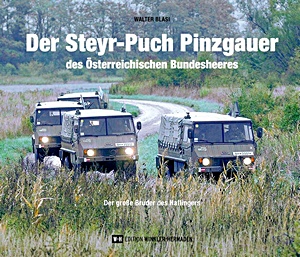
Der Steyr-Puch Pinzgauer des Österreichischen Bundesheeres

Tras su libro sobre el Haflinger, Walter Blasi presenta ahora una documentación ilustrada sobre su sucesor, el Steyr-Puch Pinzgauer del ejército austríaco. Considerado uno de los mejores vehículos todoterreno del mundo, el Pinzgauer alcanzó fama internacional y estatus de culto.
La demanda de un vehículo más grande y potente llevó en 1964 al inicio de la producción en serie en Graz. Los primeros prototipos fueron probados en 1965.

Se fabricaron dos versiones principales: 4×4 y 6×6, adaptadas a diferentes tareas. Inicialmente equipado con un motor de gasolina, más tarde recibió un motor diésel.
Miles de vehículos se entregaron al ejército austríaco y al suizo. Tras casi 30 años de producción y unas 24.000 unidades, la fabricación terminó en Graz en 2000.

Detalle del libro

Autor:Walter Blasi
Presentación:120 páginas, 21.5 x 24 x 1.5 cm, tapa dura
Ilustración:ricamente ilustrado
Idioma:Alemán
Editorial:Edition Winkler-Hermaden (A, 2022)
ISBN:9783950493764
Portada del libro: Der Steyr-Puch Pinzgauer des Österreichischen Bundesheeres | Edition Winkler-Hermaden

Der Steyr-Puch Pinzgauer des Österreichischen Bundesheeres

Idioma: Alemán

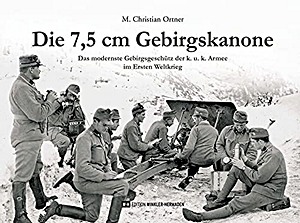
Die 7,5 cm Gebirgskanone - Das modernste Gebirgsgeschütz der k. u. k. Armee im Ersten Weltkrieg

With the 7.5 cm M.15 mountain cannon system Škoda, the Austro-Hungarian Army had the most modern mountain cannon used in the First World War. It replaced the 7 cm M.99 mountain cannon, which was already considered technically outdated when it was introduced.
As early as 1904, the Technical and Administrative Military Committee worked intensively on a successor model for the M.99 system, but the M.8 and M.9 cannons were only interim solutions. Although corresponding test models from the major gun manufacturers Schneider, Krupp and Škoda already existed, a new design was decided upon.

With the M.12 prototype, Škoda ultimately presented a completely equivalent gun. The cannon, eventually designated M.15, fulfilled all expectations and was used on all Austro-Hungarian fronts from 1915 to 1918, especially on the Italian theater of war.
In addition, imperial and royal artillery formations in Turkey and Turkish batteries were also equipped with this modern cannon.

From 1915 to 1918, a total of 2181 barrels and 2023 carriages were produced. The cannon was also delivered to Germany and was still used during the Second World War.
In this book, M. Christian Ortner documents the history of this famous mountain gun in an informative text and with the help of numerous previously unpublished illustrations.

Detalle del libro

Autor:M. Christian Ortner
Presentación:96 páginas, 15.5 x 21 x 1.5 cm, tapa dura
Ilustración:ricamente ilustrado
Idioma:Alemán
Editorial:Edition Winkler-Hermaden (A, 2019)
ISBN:9783950472004
Portada del libro: Die 7,5 cm Gebirgskanone - Das modernste Gebirgsgeschütz der k. u. k. Armee im Ersten Weltkrieg | Edition Winkler-Hermaden

Die 7,5 cm Gebirgskanone - Das modernste Gebirgsgeschütz der k. u. k. Armee im Ersten Weltkrieg

Idioma: Alemán

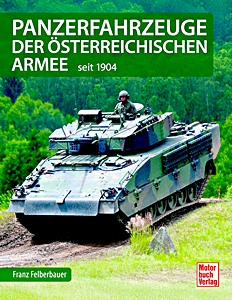
Panzerfahrzeuge der österreichischen Armee - seit 1904

NUEVO

Las fuerzas armadas de Austria cuentan con una notable variedad de vehículos blindados. Los primeros modelos fueron fabricados por Austro-Daimler entre 1903 y 1905. En la década de 1930, el ejército utilizó varios tanques ligeros italianos.
Tras la Segunda Guerra Mundial, se crearon unidades blindadas modernas equipadas primero con vehículos estadounidenses y franceses, como el AMX-13. Más tarde se introdujeron diseños nacionales, como el cazacarros Kürassier. Hoy, el Leopard 2A4 alemán es el principal carro de combate del ejército austriaco.

En este libro ricamente ilustrado, el historiador militar Franz Felberbauer ofrece una visión completa de los vehículos blindados austríacos: desde el Steyr ADGZ, Kürassier y Ulan hasta el Pandur, Dingo y Leopard 2A4.
Incluye datos técnicos, contexto histórico y numerosas fotografías inéditas. El autor participó directamente en el desarrollo técnico de varios de estos vehículos.

Detalle del libro

Autor:Franz Felberbauer
Presentación:128 páginas, 28.5 x 21 x 1.3 cm, tapa dura
Ilustración:140 fotos en b/n y color
Idioma:Alemán
Editorial:Motorbuch Verlag (D, 2025)
ISBN:9783613047631
Portada del libro: Panzerfahrzeuge der österreichischen Armee - seit 1904 | Motorbuch

Panzerfahrzeuge der österreichischen Armee - seit 1904

Idioma: Alemán

También te puede interesar:

Portada del libro: The World Encyclopedia of Military Vehicles

The World Encyclopedia of Military Vehicles

Pat Ware | Inglés | tapa dura | 256 pág. | 2010

Portada del libro: Riot Control Vehicles 1945-Present | New Vanguard (219)

Riot Control Vehicles 1945-Present

Chris McNab | Inglés | tapa blanda | 48 pág. | 2015

Portada del libro: Vehicle Art of World War Two

Vehicle Art of World War Two

John Norris | Inglés | tapa dura | 179 pág. | 2016

Portada del libro: Armored Trains | New Vanguard (140)

Armored Trains

Steven J. Zaloga | Inglés | tapa blanda | 48 pág. | 2008